Yacht Photo Shoot in Lisbon and Cascais
Date of publication: 05 Jun 2019 | Updated: 25 Sep 2026This article collects what people ask me after the yacht is already booked. It should really come the other way round, but it rarely does, so here it all is in one place.
The photographer takes a seat
Starting with the unpleasant part. There's no "a bit more room" on a boat. There's a number, and it's written down.
How many people can come is decided by the maritime administration, not by the owner and not by the tour operator. Every boat has its own lotação de segurança, the number of people on board written into its papers, and nobody can change it on the day you sail.
The number 12 does appear in the Portuguese rules, but it doesn't mean "no more than this". Decreto-Lei 149/2014 uses 12 passengers, crew not counted, as the line above which the requirements change: the crew has to be registered seafarers, the boat may not go more than 3 or 12 nautical miles from the coast depending on its type, and it may only sail between sunrise and sunset. So more than 12 guests isn't a ban. It's a different boat, a different crew and a different route.
So the photographer has to be counted among your guests from the start, while you're still choosing the boat.
One practical rule: ask the tour operator to confirm how many people can come on board including the photographer. One message, and you never have to think about it again, before you book rather than after.
The tour operator needs to know in advance
This isn't a formality or a courtesy. The tour operator (the captain, or whoever organises the trip) is responsible for everything that happens on board and has to know who is coming before you leave the dock. The photographer is a separate line on that list, not a "plus one" attached to you.
So tell them when you book: we're bringing a photographer. It takes a minute to settle while the boat is still filling up.
River or ocean, 2 different kinds of shoot
This is the most common planning mistake. "A yacht in Lisbon" and "a yacht off Cascais" sound like the same thing. On the water they are different conditions, different motion, and sometimes different weather.
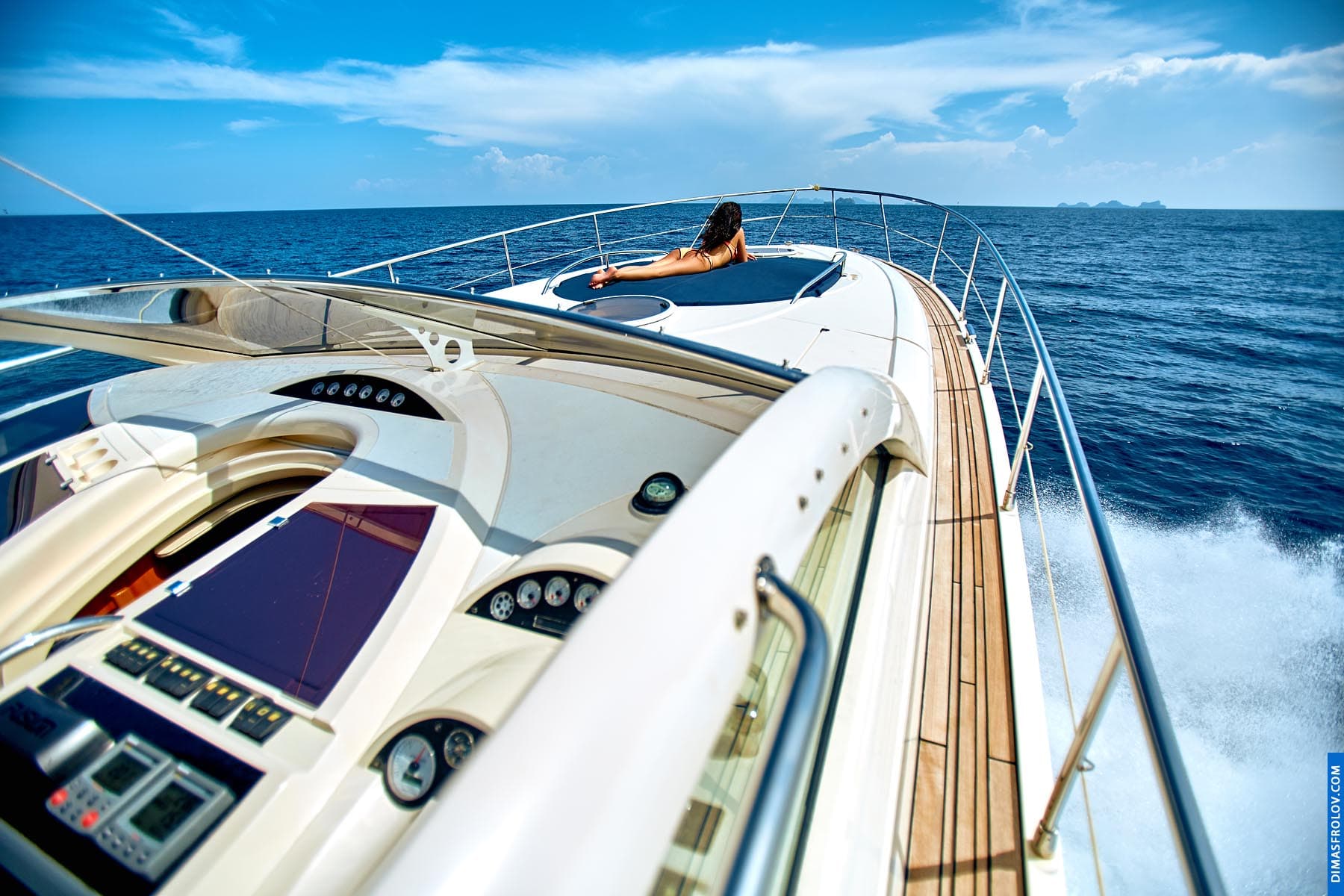
The Tejo inside the city isn't the sea yet. It's a wide river mouth with land on both sides. The further up the river you go, the calmer it gets: under the 25 de Abril bridge the swell is noticeably smaller than it is even inside Cascais bay. Cascais is where open water starts. Go further out, past Guincho and Cabo da Roca, and the wind and the swell there have their own opinion, which has nothing to do with your plan for the day.
For photographs that difference comes down to something simple. The river is calm more often, so you can build a frame without chasing a glass across the table or holding someone's hair down. Open water gives you that less often. The frames are livelier, but a quiet portrait on deck may not happen at all. Neither one can be promised: the day decides.
The question worth asking the skipper before you leave: where exactly are we going, and what swell do you expect there. Not "will the weather be nice", but the area and the swell. It's one sentence and it decides half of what the photographs will look like.
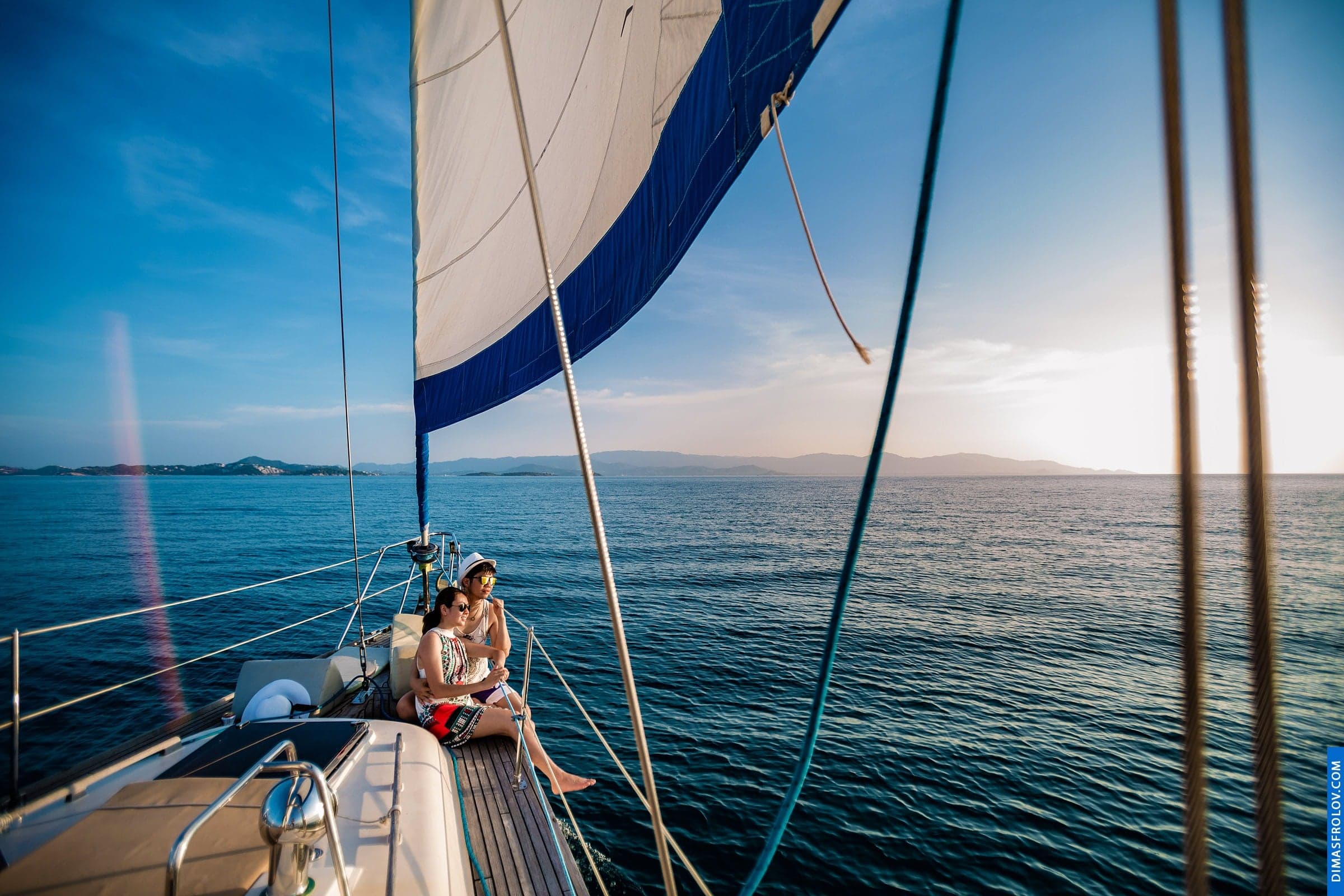
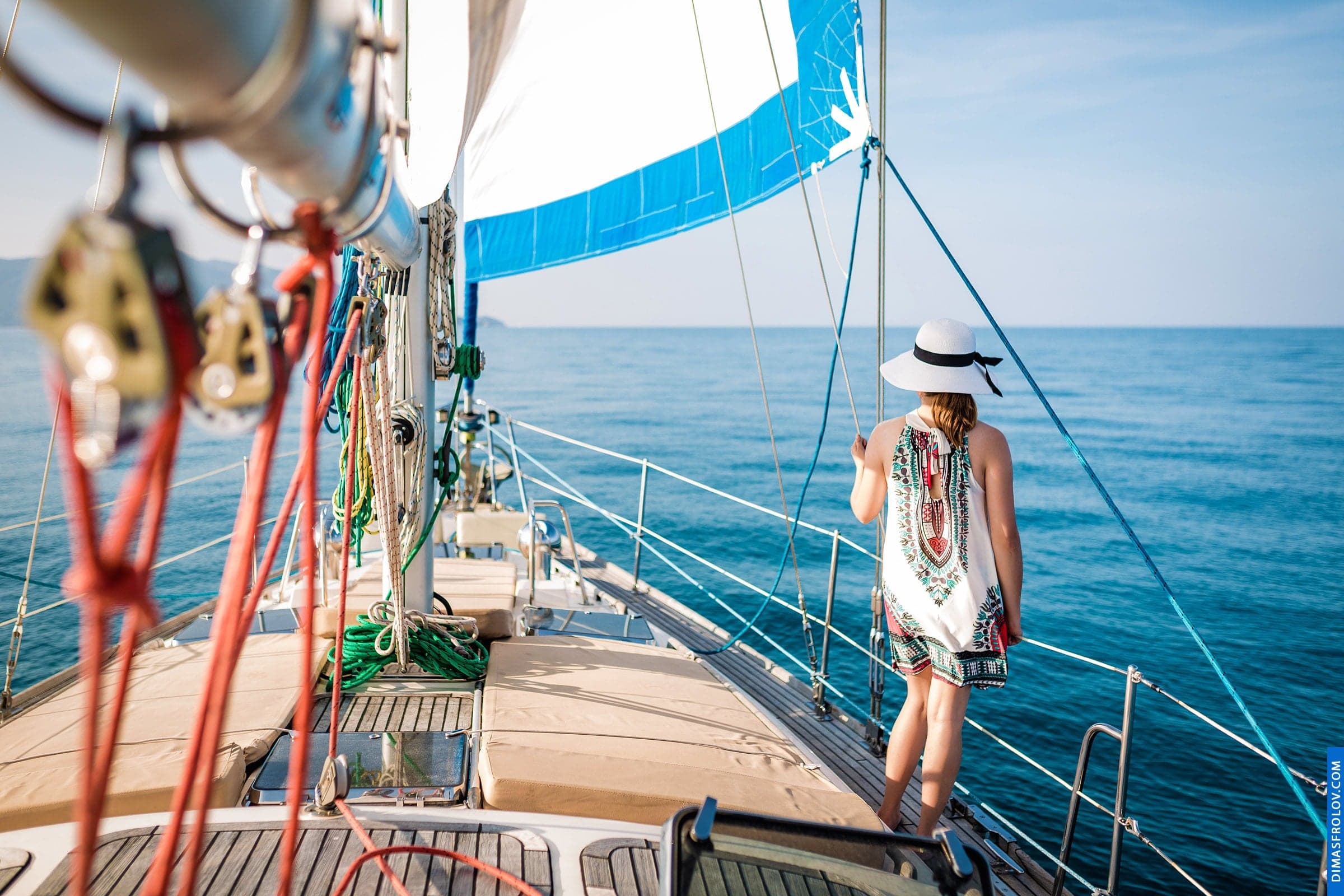
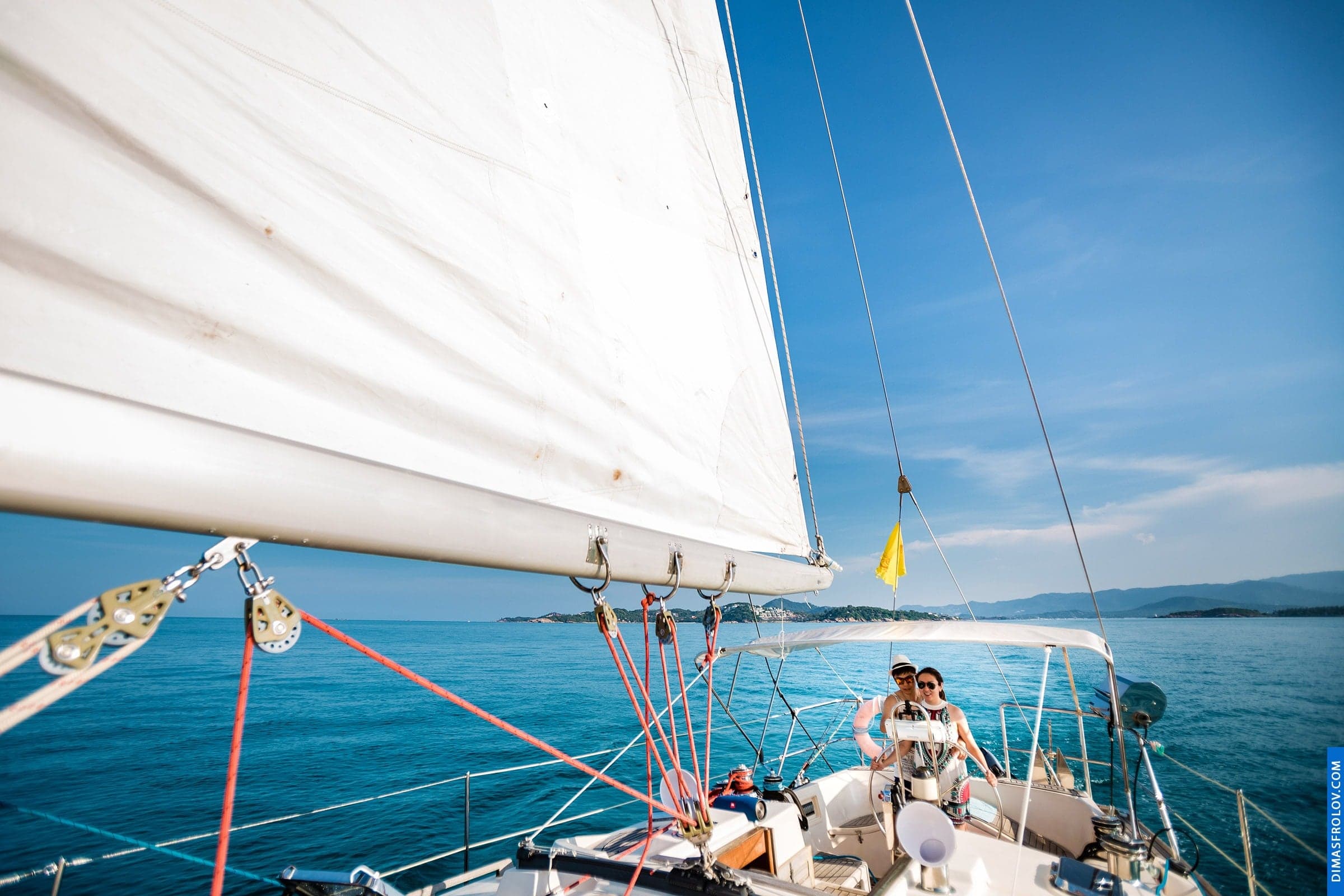
A note on sailing boats. The frame people go out for is the one with the sails up. But raising them takes wind, and that's the catch: the better the frame, the faster the boat goes. I was once on a trip where the big headsail went up and the yacht picked up dangerous speed within a minute, and it had to come straight back down.
That means "we'll do a shot with the sails up" isn't a line in the plan. It's the skipper's decision in that particular minute, and it depends on the wind that day. Worth mentioning to them early, not when the sails are already going up.
When to go out
2 questions here, the month and the hour. Both are worth thinking about, because in Lisbon the answers aren't the ones you'd guess.
The month
The strongest average wind in Lisbon is in summer: July gives 18.4 km/h against 12.9 in January. Sharp gusts run the other way. Days with gusts of 60 km/h or more are rarest in summer, 0.3 a month in June, and most frequent in winter, 2.3 in December.
September sits between the two, and that works in its favour. The summer wind is already easing, 14.7 km/h against 18.4 in July, while gusts are still as rare as in summer, 0.7 days a month. Of the warm months it's the only one where both numbers are low. The water's still warm too, and sunset falls around 20:00 rather than 21:00. That doesn't prove September is the calmest month on the water: the figures describe wind at one inland station and say nothing about swell or about any particular route. As a starting point for planning, though, September is a reasonable bet.
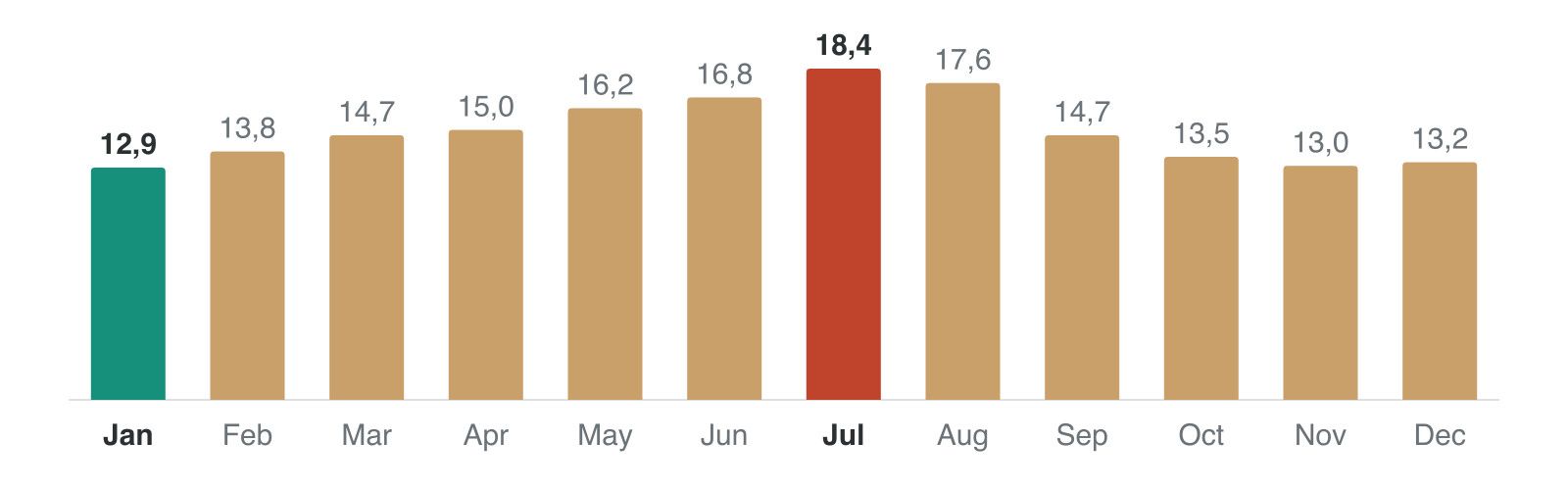
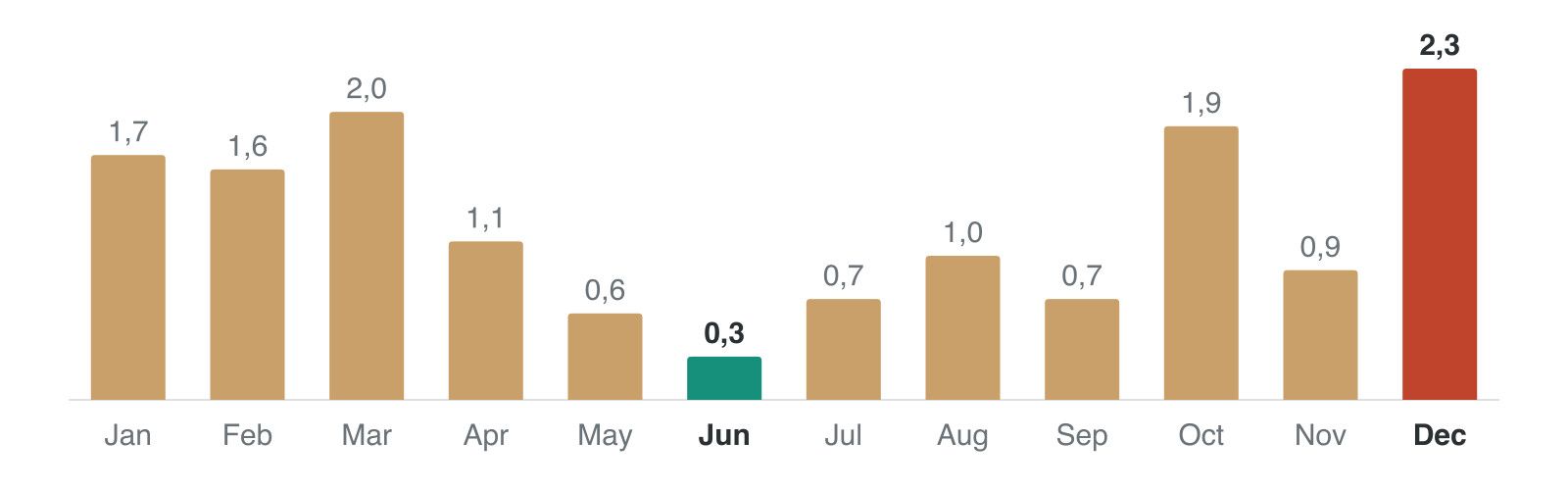
Being honest about those numbers: they're 30 years of observations, 1995 to 2024, from the weather station at Lisbon airport, which I took from the NOAA archive and worked through myself. The official climate normals of IPMA, the Portuguese weather institute, give wind for only 12 years, and its newer normals leave wind out altogether. The gusts here are the ones that made it into aviation weather reports, so the real count is a little higher than the chart shows: compare the months with each other, not the absolute numbers. The airport also sits inland and higher up, so applying these figures to conditions on the water needs care. I couldn't find comparable measurements on the coast itself. The order of magnitude is right; precision isn't something to expect from them.
The hour
In summer the nortada blows here, a northerly that arrives around 2 or 3 in the afternoon and holds until evening. In season it runs 15 to 20 knots, and near Cabo da Roca the gusts reach 30. It's also what saves you from the heat, taking a few degrees off what you actually feel. More about this wind in the Wikipedia article on the Nortada.
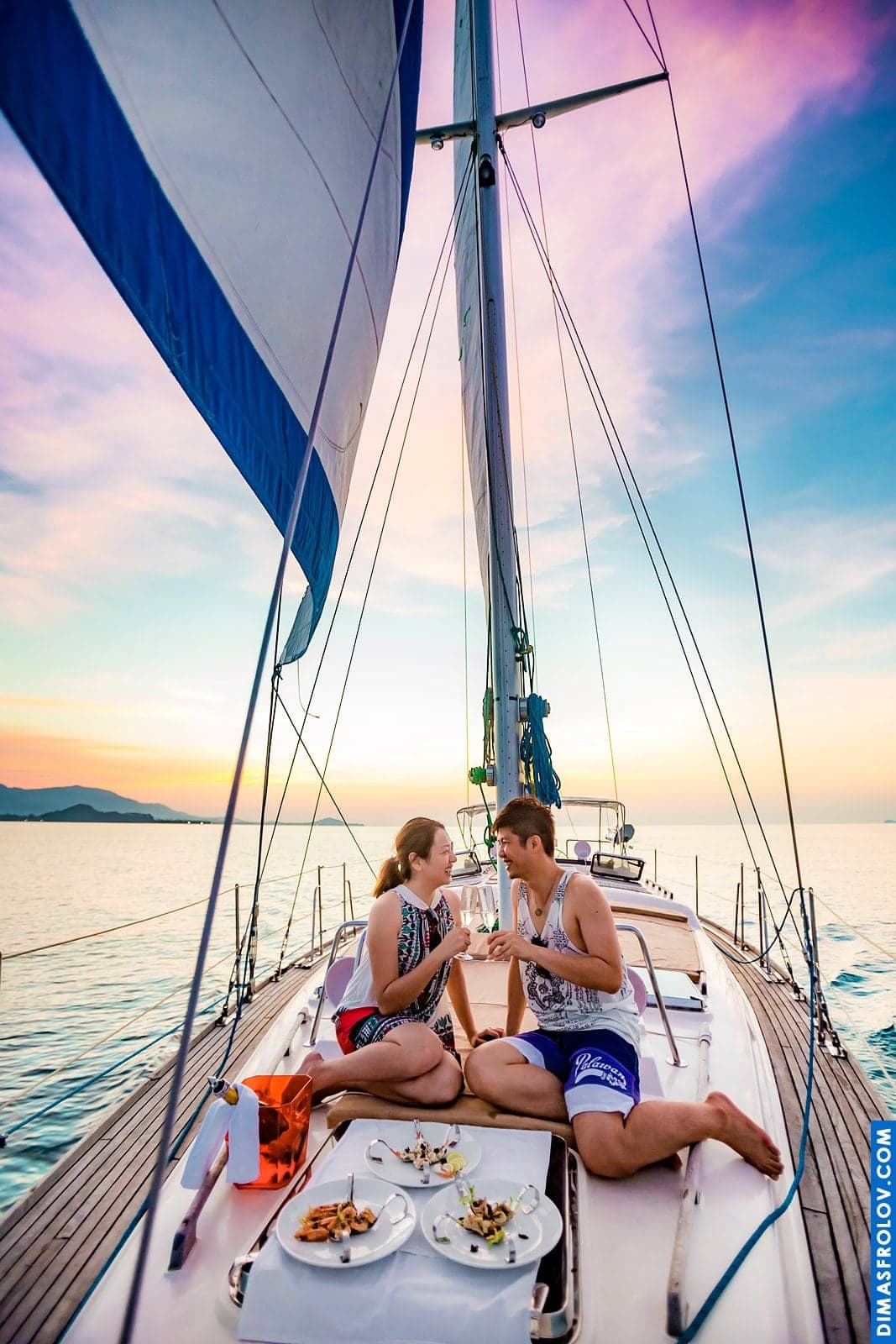
Because of it, morning and evening on the water are 2 different activities. Before lunch, while the nortada hasn't started, the water is usually flatter and the light is clean and a little hard. Closer to sunset you get the light everyone goes out for, and the motion that comes with it.
About sunset itself: in Lisbon it moves by almost 4 hours across the year. The latest is 21:07 on 28 June, the earliest 17:16 on 7 December. A June sunset trip means a late evening instead of dinner; an October one fits comfortably after work. Worth checking for your own date before you agree on a time: sunrise and sunset times for Lisbon on timeanddate.com.
Where to sail from
The marina decides more than your drive to the dock. It decides what will be behind you in the frame, and even what size of boat can physically fit.
- Cascais marina is the largest on this coast: 650 berths, boats up to 36 metres, and a direct exit into open water. The big yachts start here, and so do the trips along the cliffs.
- Doca de Alcântara has 440 berths, inside the river mouth, right under the bridge. The city is close and the water is calm.
- Doca de Belém has 194 berths and the smallest boats of the three: official sources put the limit somewhere between 12 and 15 metres. It's the prettiest place to board, but a large yacht simply can't get in.
That decides it in practice. If what you picture is a big boat with a deck for guests, that means Cascais or Alcântara, not Belém, however good Belém looks in photographs taken from the shore.
What it costs
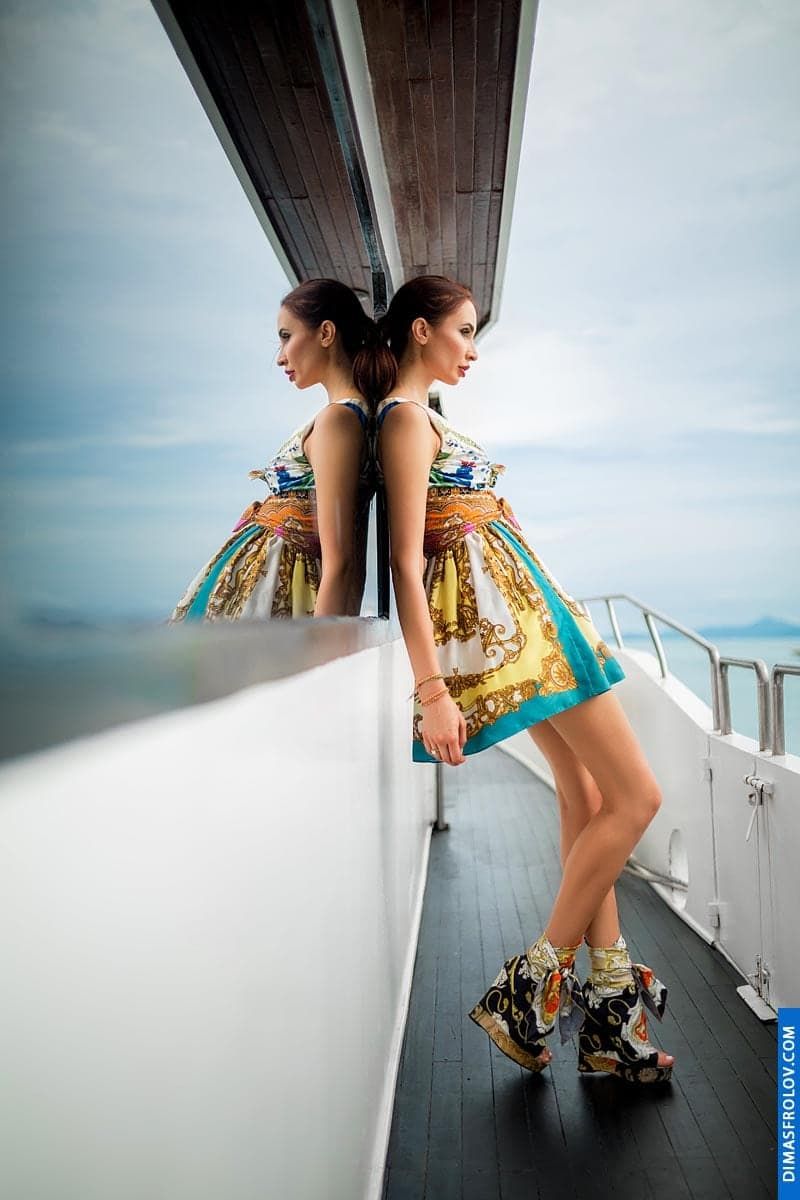
The charter and the photographer are 2 separate sums, and they are counted differently.
A private charter in Lisbon starts at roughly 300 to 400 euros for a few hours on a small boat and rises with the yacht from there: bigger ones, with crew, for a group of up to 30 guests, start somewhere above 700 euros plus VAT, and a sunset trip is usually dearer than a daytime one. There's no upper limit here at all. It stops at the boat, not at the route.
My part is counted separately, and it's counted individually. The reason is simple: there's no "hour of shooting" on the water. If we're at sea for 10 hours, I'm at sea for 10 hours, even if I'm actively shooting for 3 of them. So an hour on a yacht can't cost what an hour on shore costs, and folding it into the standard rate would be unfair to you and to me both.
Write to me with the boat, the marina you're leaving from and how many hours are planned, and I will work it out. The base rates for ordinary shoots are on the pricing page, and they are the starting point.
The same page covers the rest: the minimum number of hours, how many finished photographs you get and when, how a date is booked, and what happens if the trip has to move. The same rules apply on the water, except that the hours count from time on board rather than time shooting.
What happens during those hours
I shoot almost the whole time we are on the water. But leaving the marina and coming back take about an hour between them, roughly that on a short run along the Tejo and more if we head towards Cascais. So the minimum that makes sense is 2 to 3 hours on board: out of 2 hours, about 1 is left for frames.
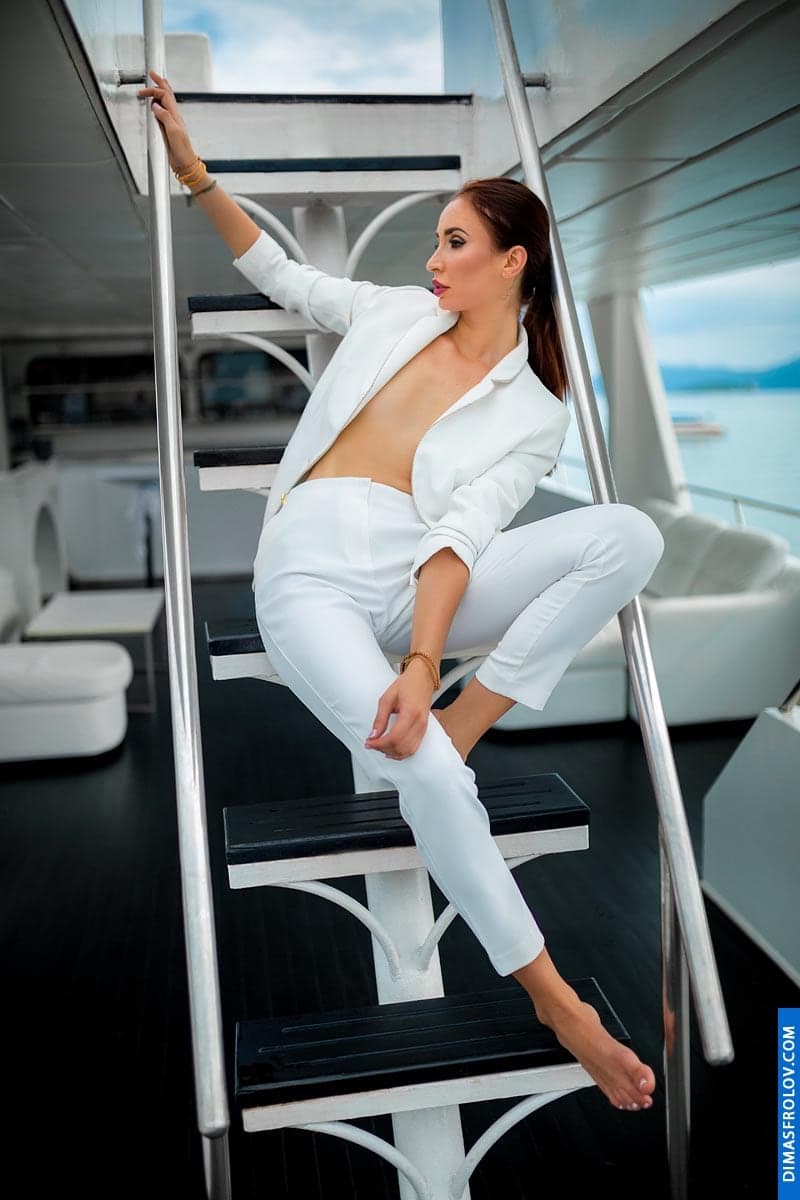
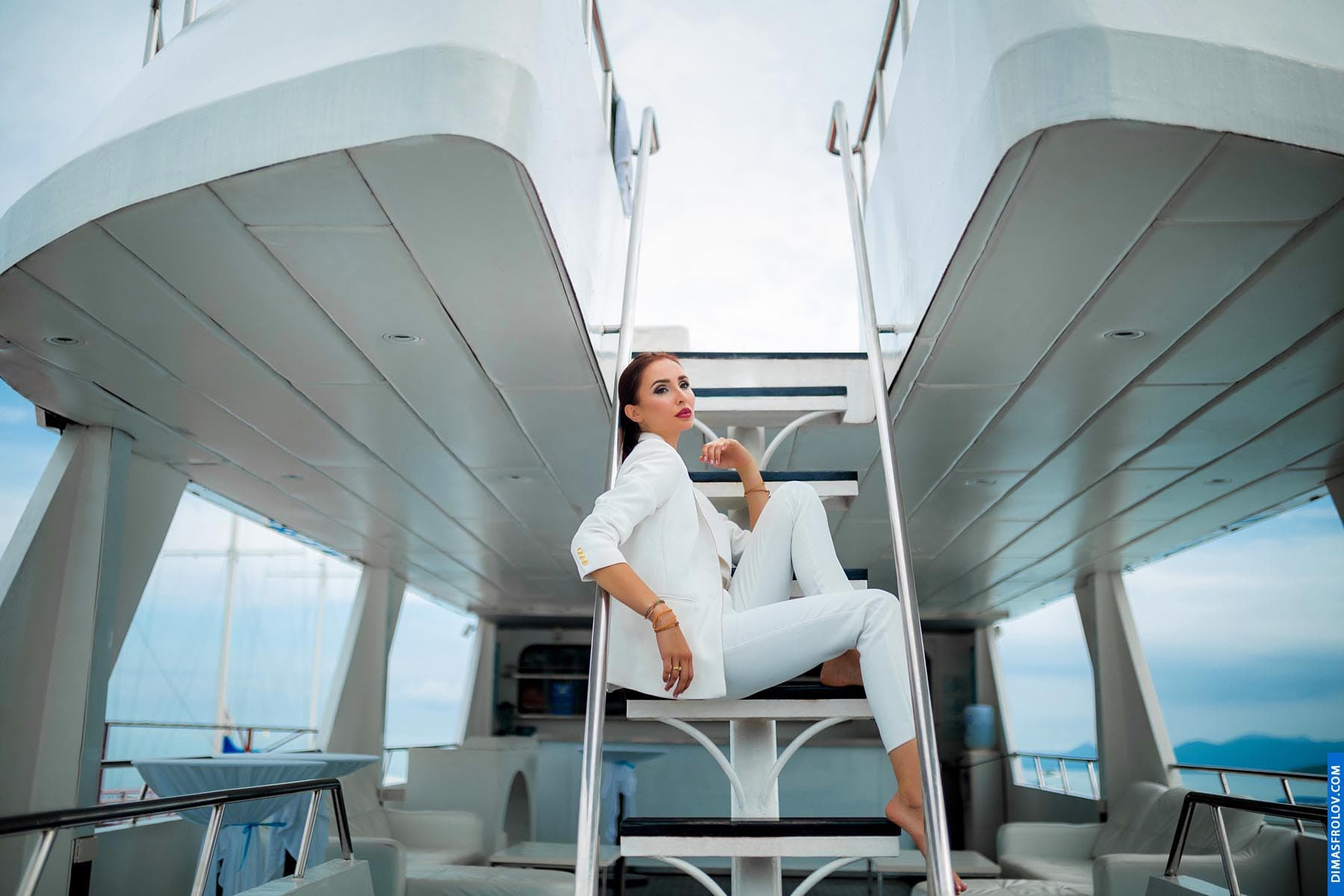
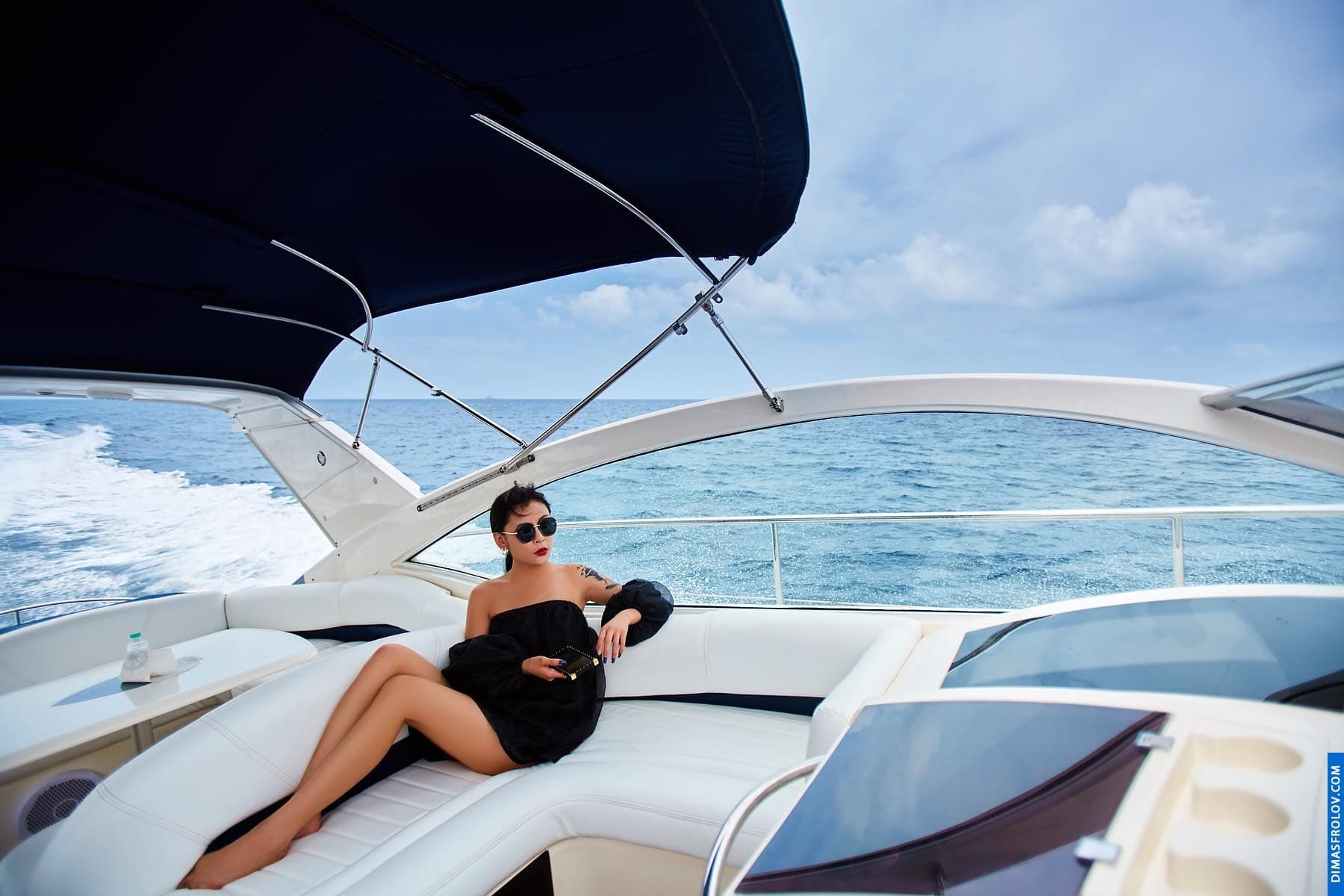
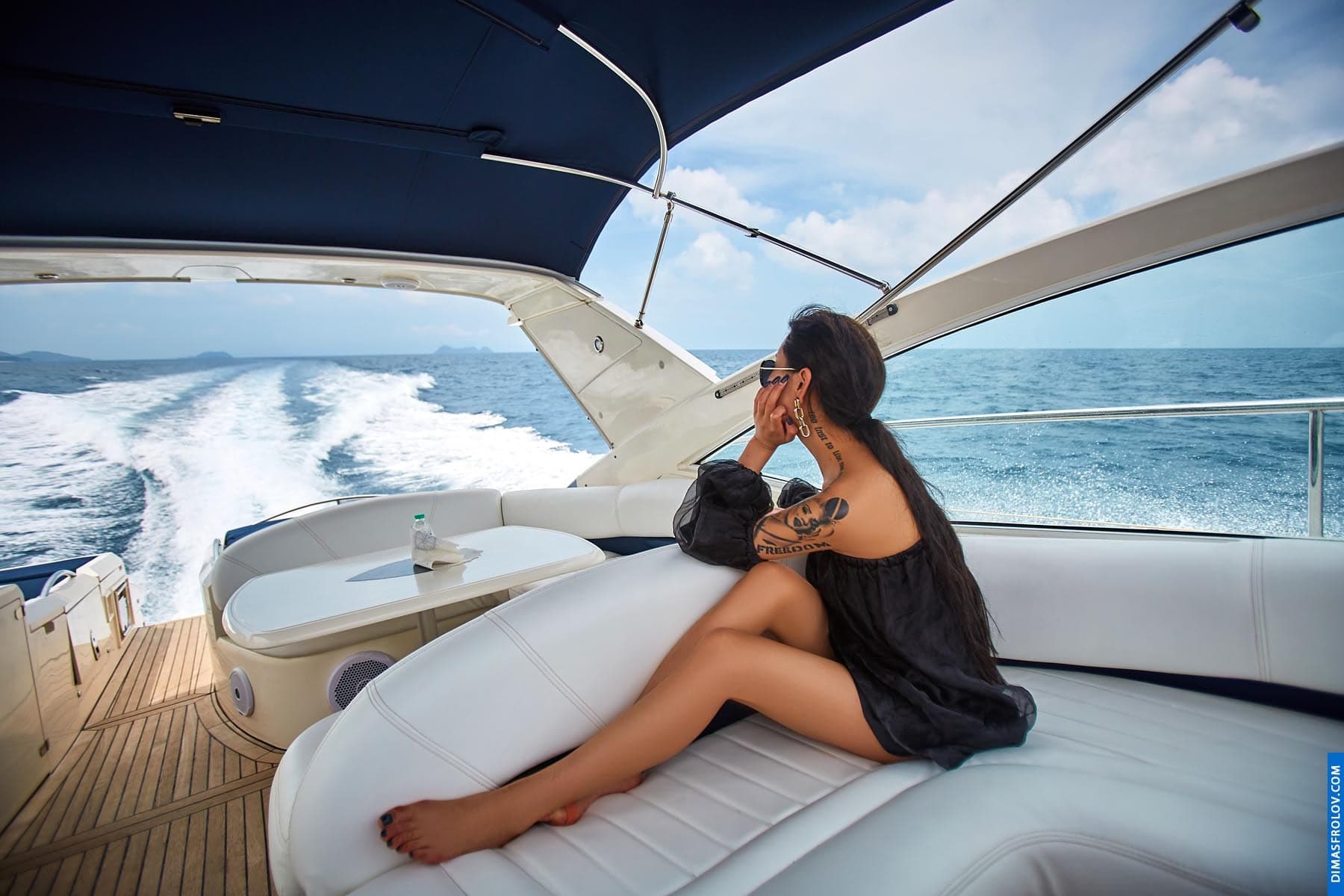
We shoot outside and in the cabin both. The interior of a large yacht often gives frames you can't get on deck.
But it isn't a continuous session. On a boat it becomes obvious very quickly when people are posing and when they are simply living, and the second one is always better.
A few things worth knowing before you go.
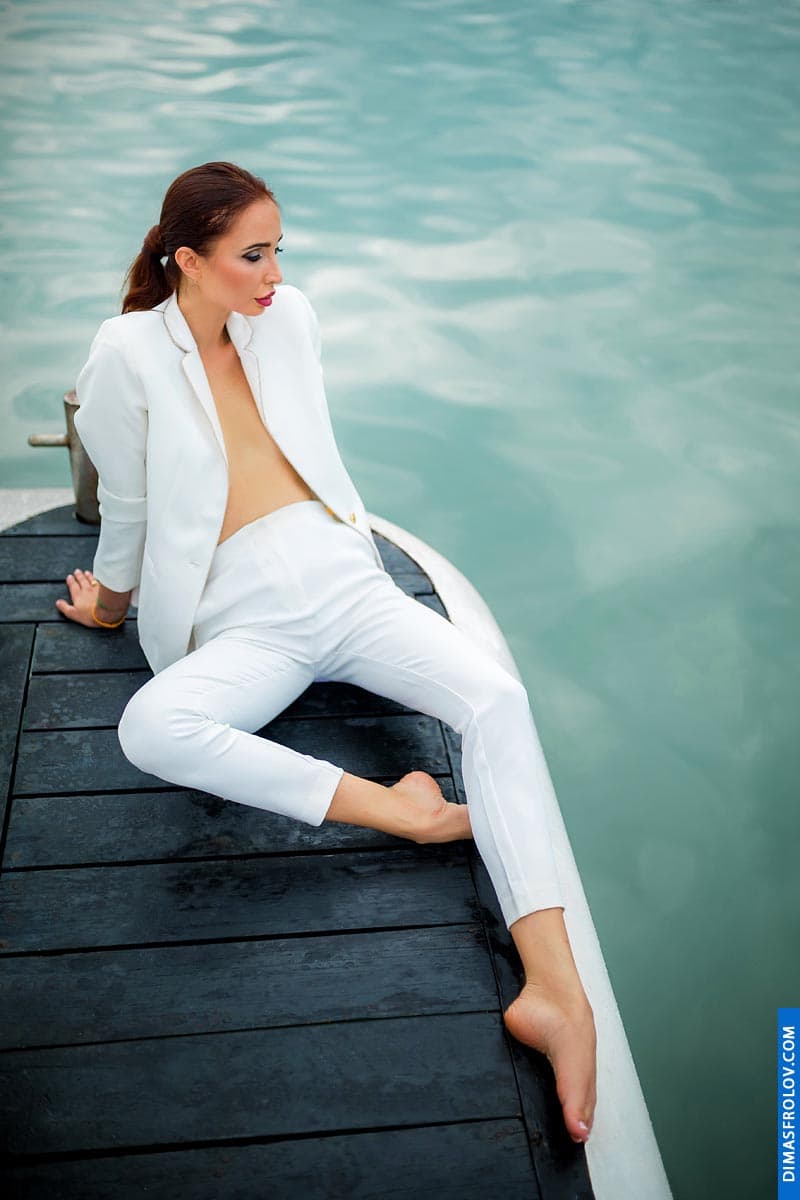
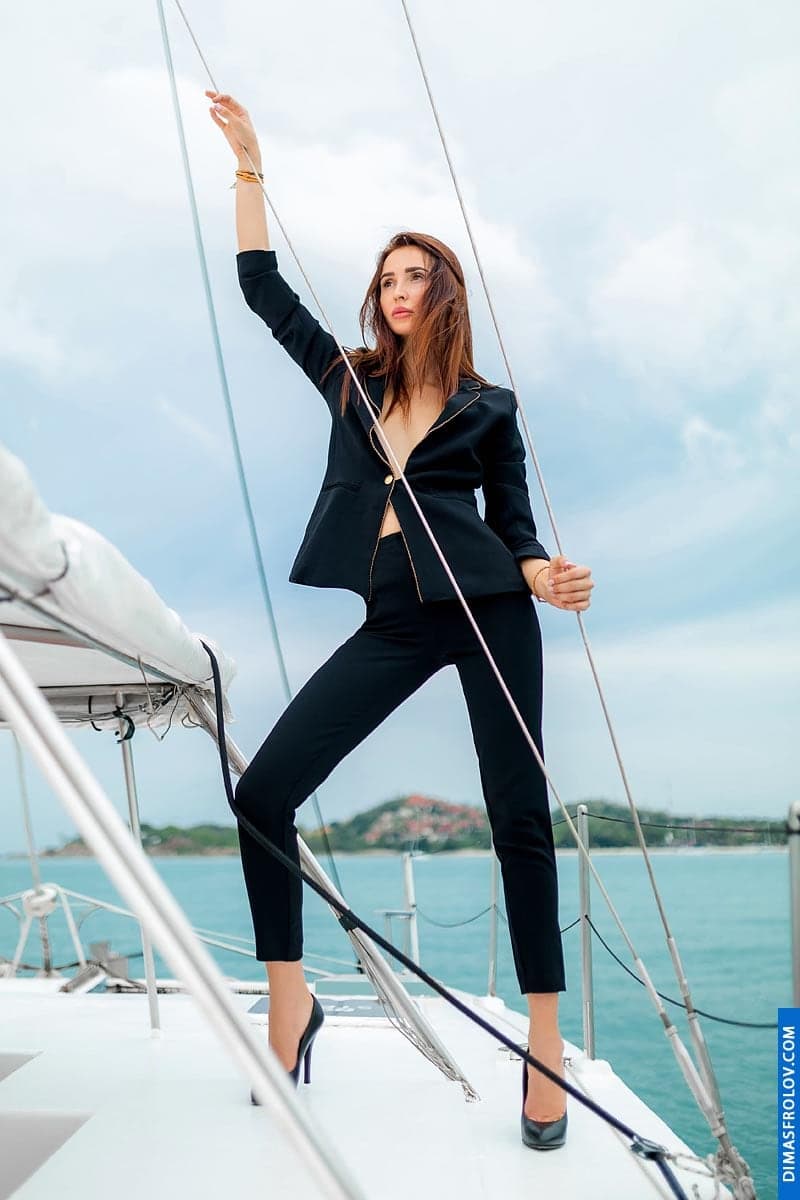
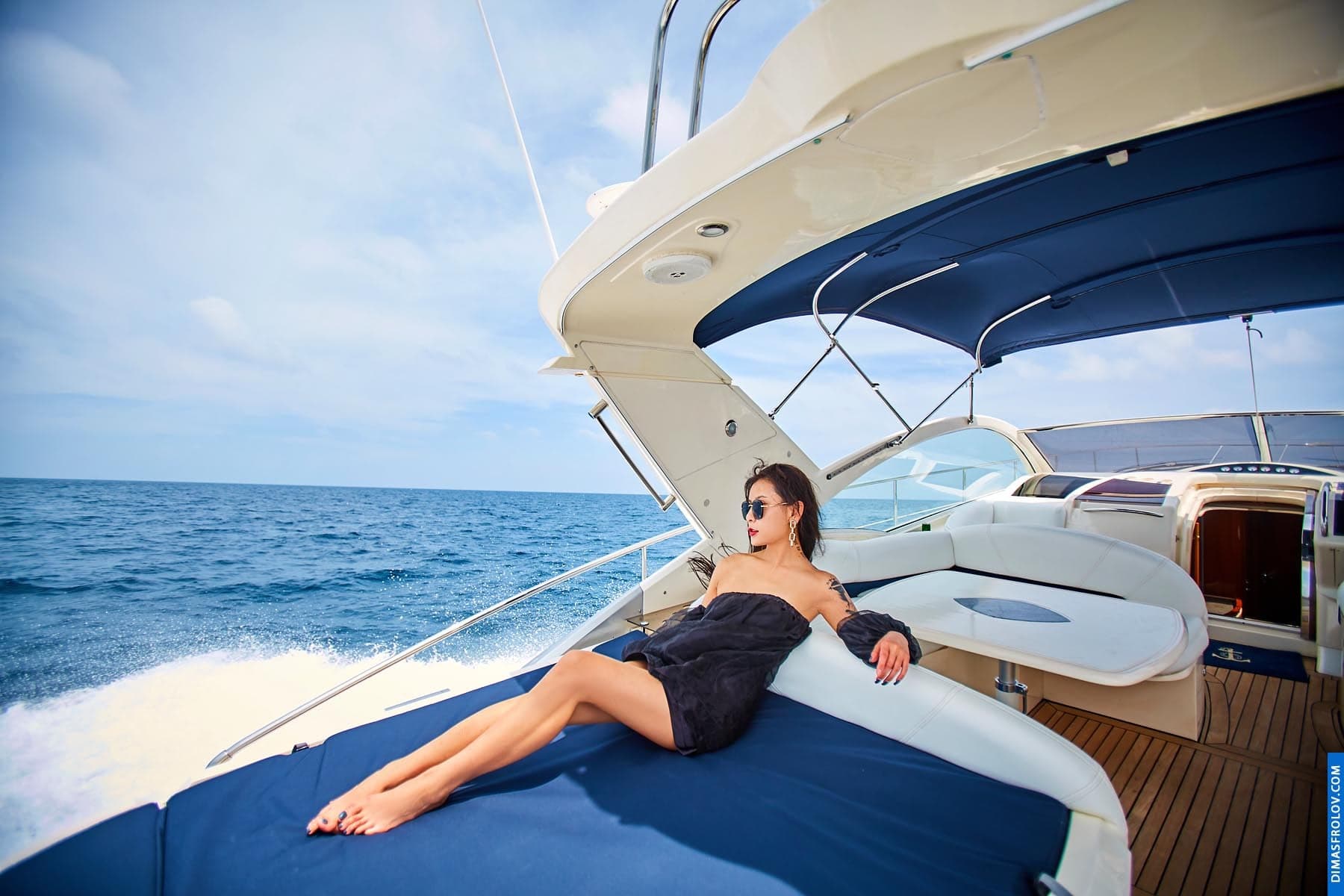
- Shoes. Heels on teak are banned almost everywhere, and that's not the tour operator being difficult. They mark the deck. Bring something flat with a light sole, and barefoot on a yacht looks better anyway.
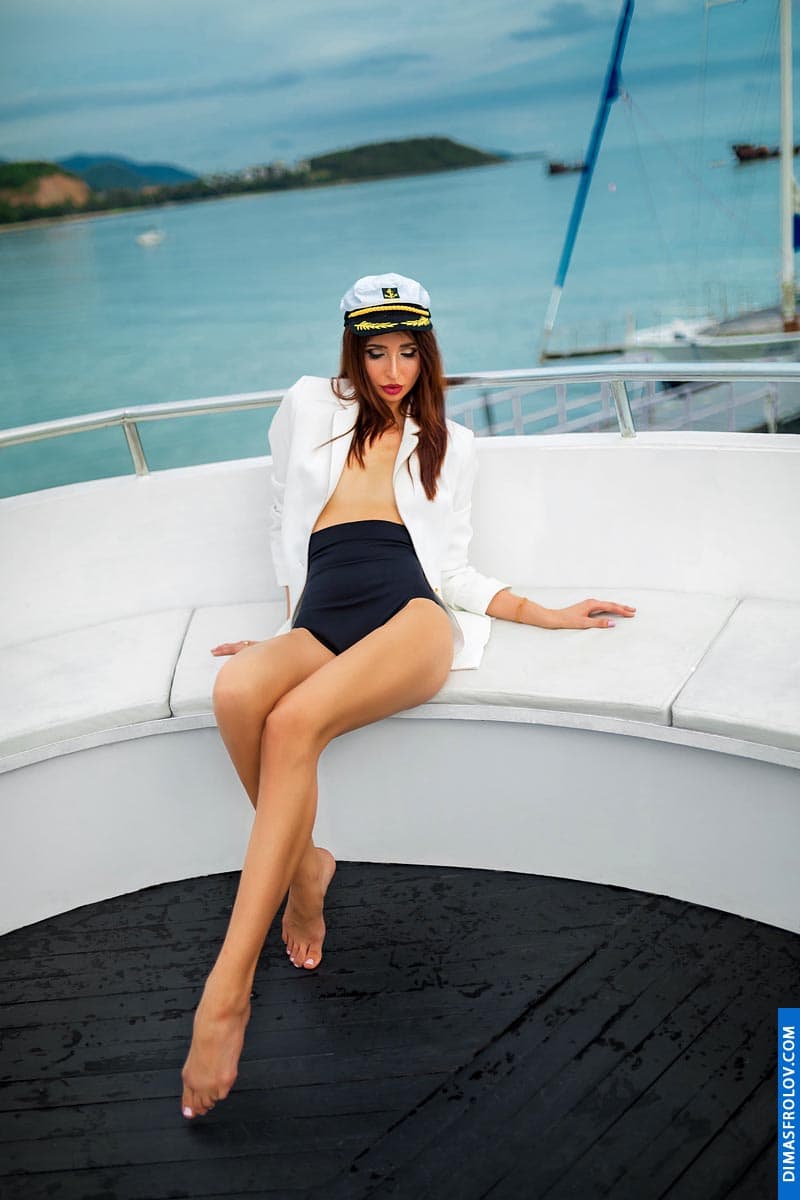
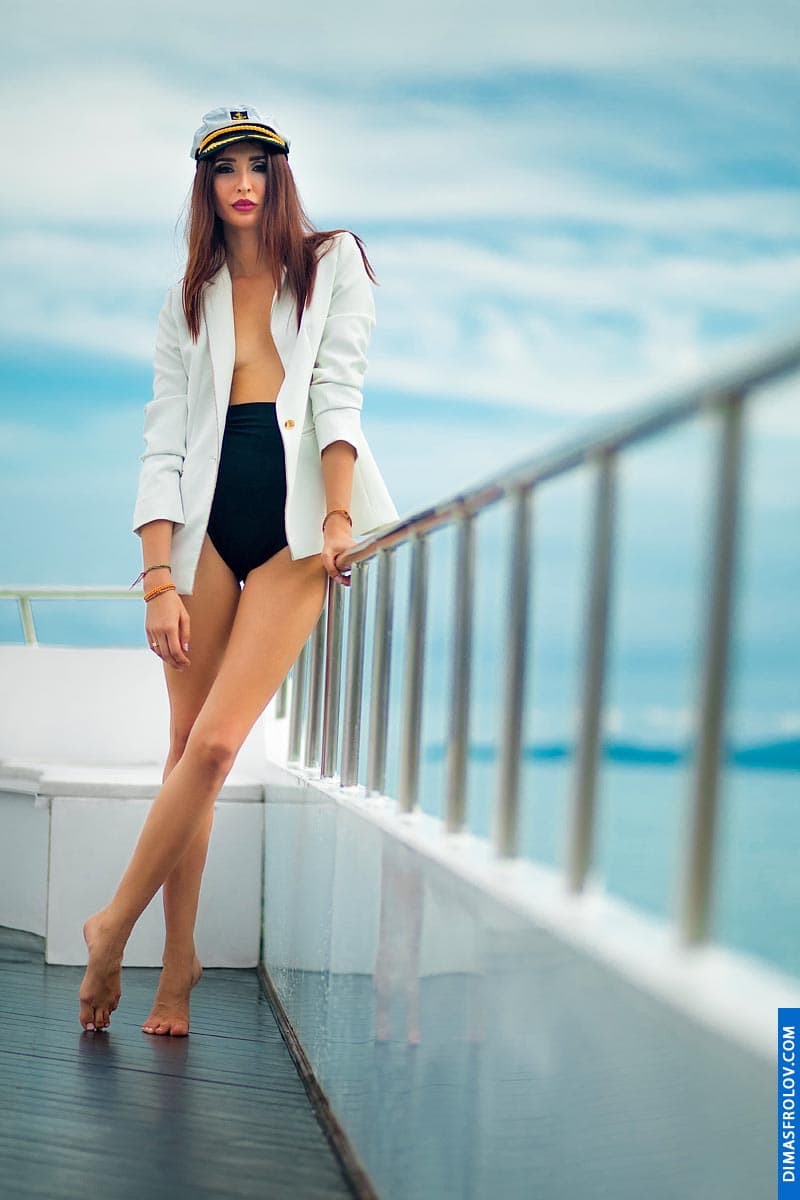
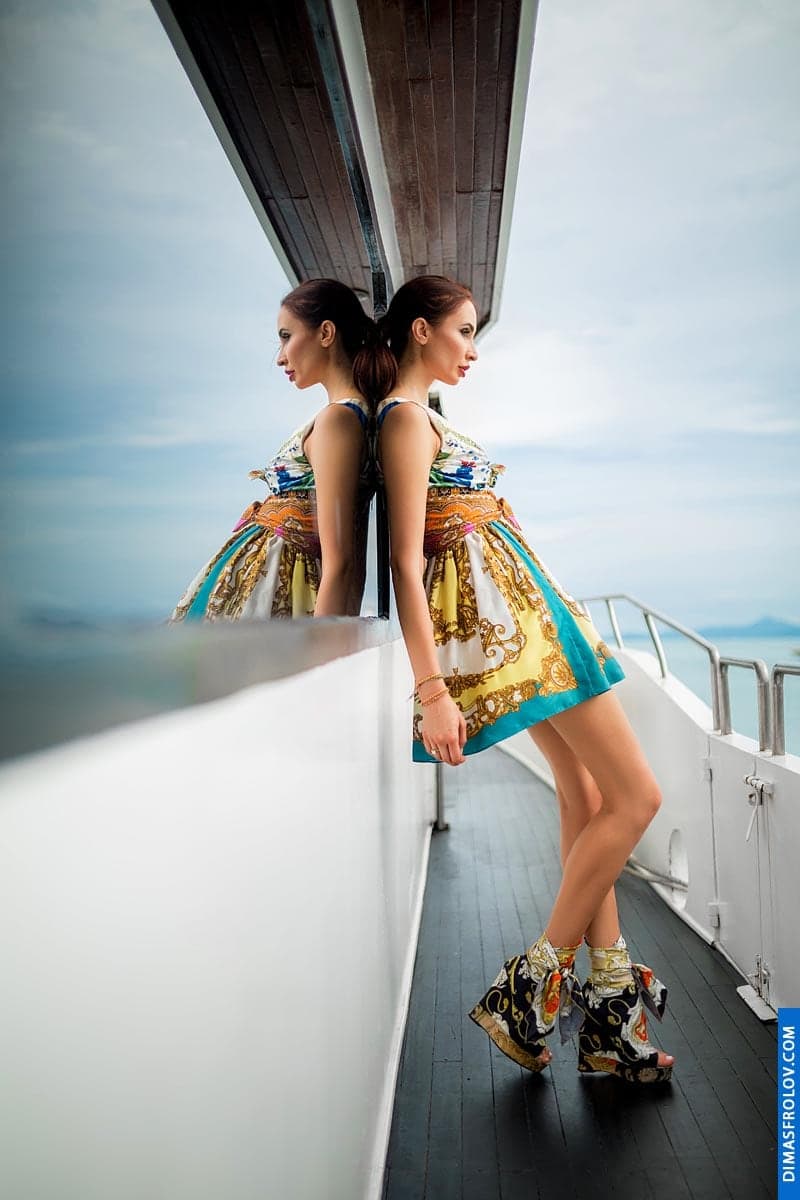
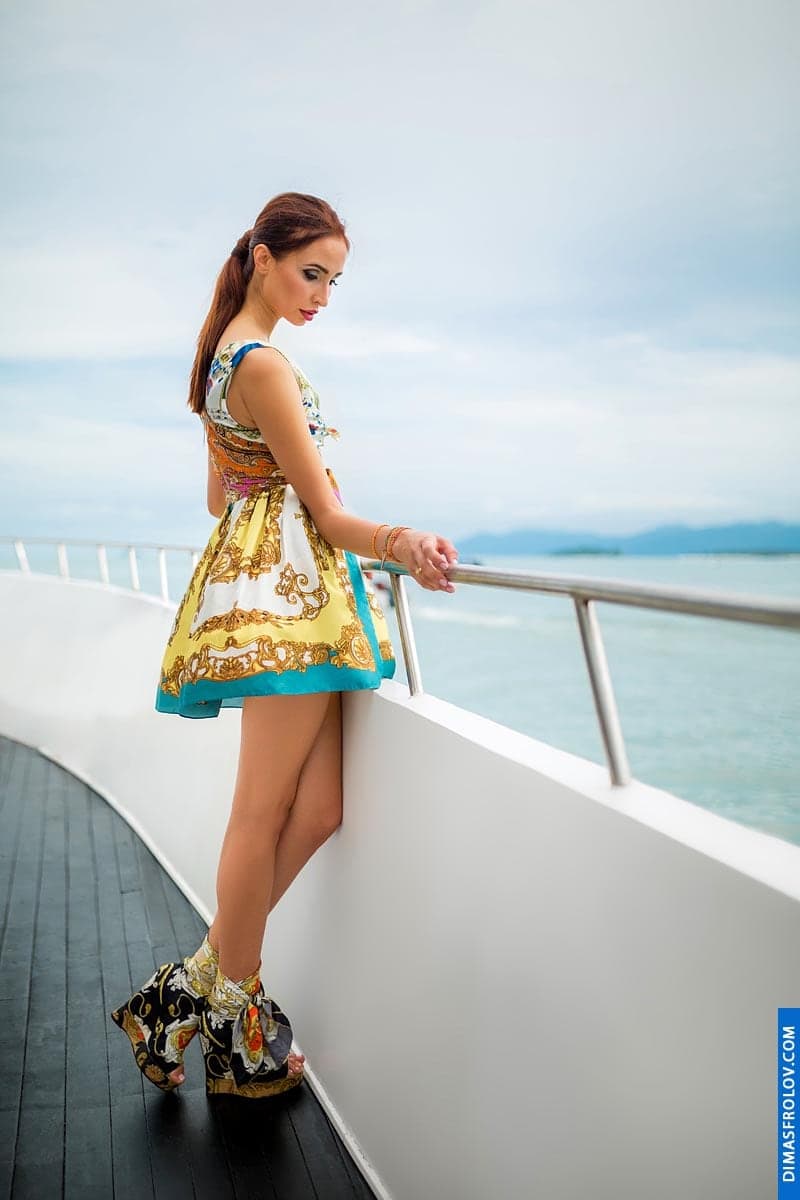
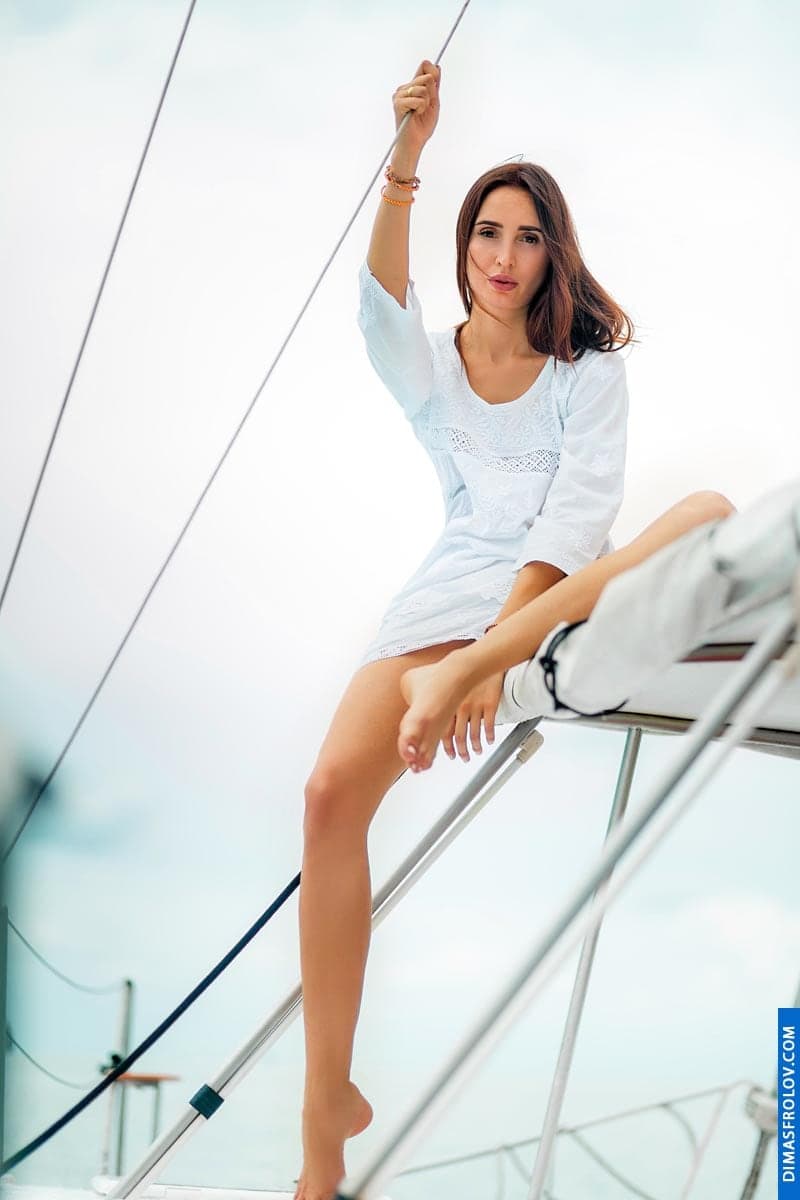
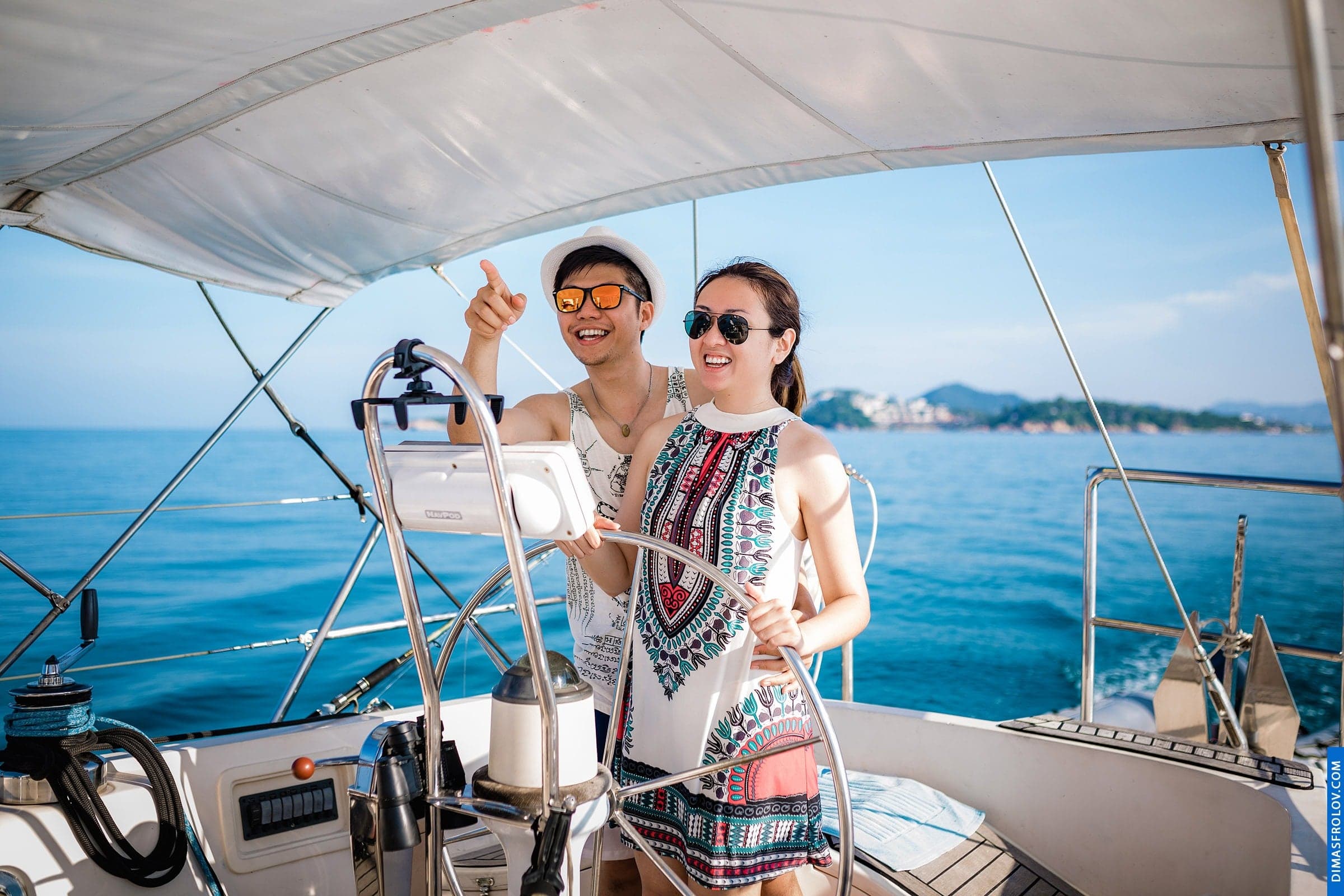
- Clothes. Light fabric that the wind picks up gives the best frames, and on the water especially. Anything you have to hold down with a hand does the opposite: the hand is what the photograph will show.
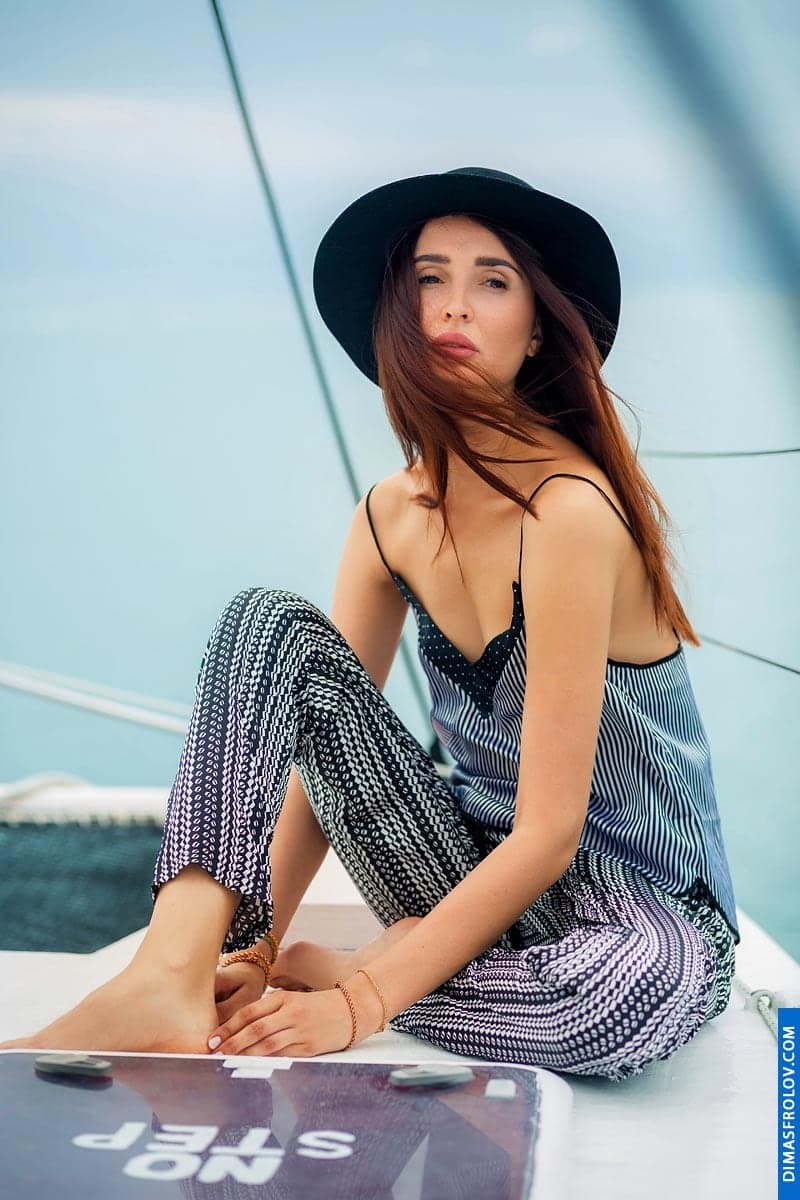
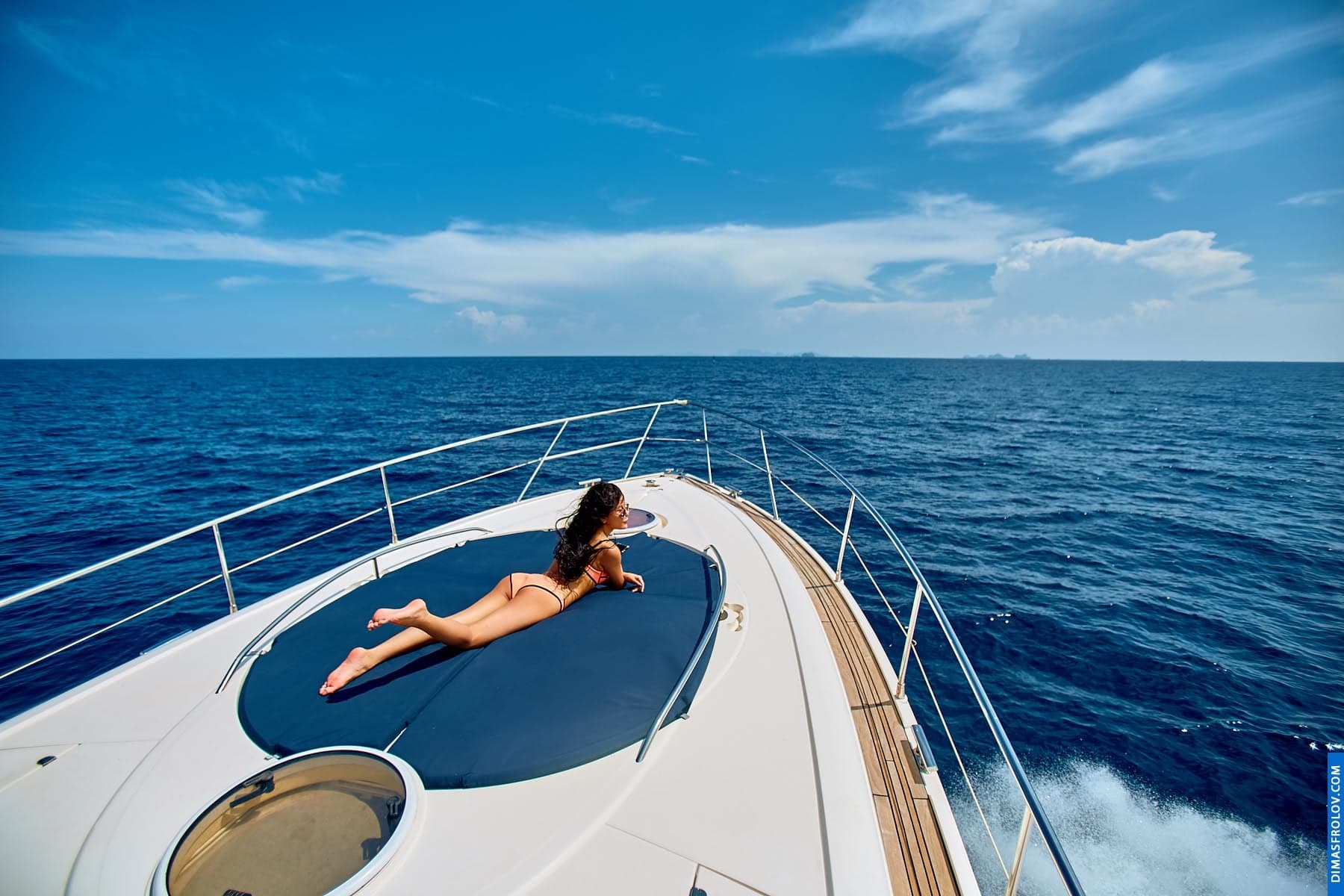
- Hat and sun cream. Yes, this is in every article, and people still forget. Over water the direct sun is joined by what the surface reflects back, and 2 hours on deck shows even in October. A hat in the frame is almost always an improvement, by the way.
- Sunglasses. Mirrored lenses hide the eyes completely. In a few frames that looks good. In all of them it doesn't.
Shoot projects are where this shows most. For a WOW magazine cover in 2016 I photographed a model on a sailing boat with big red sails. The dress was so long that next to the sail it needed half the deck. We shot while the boat was moving between islands, and the frame we wanted only worked once everyone else had gone ashore and the deck was clear.
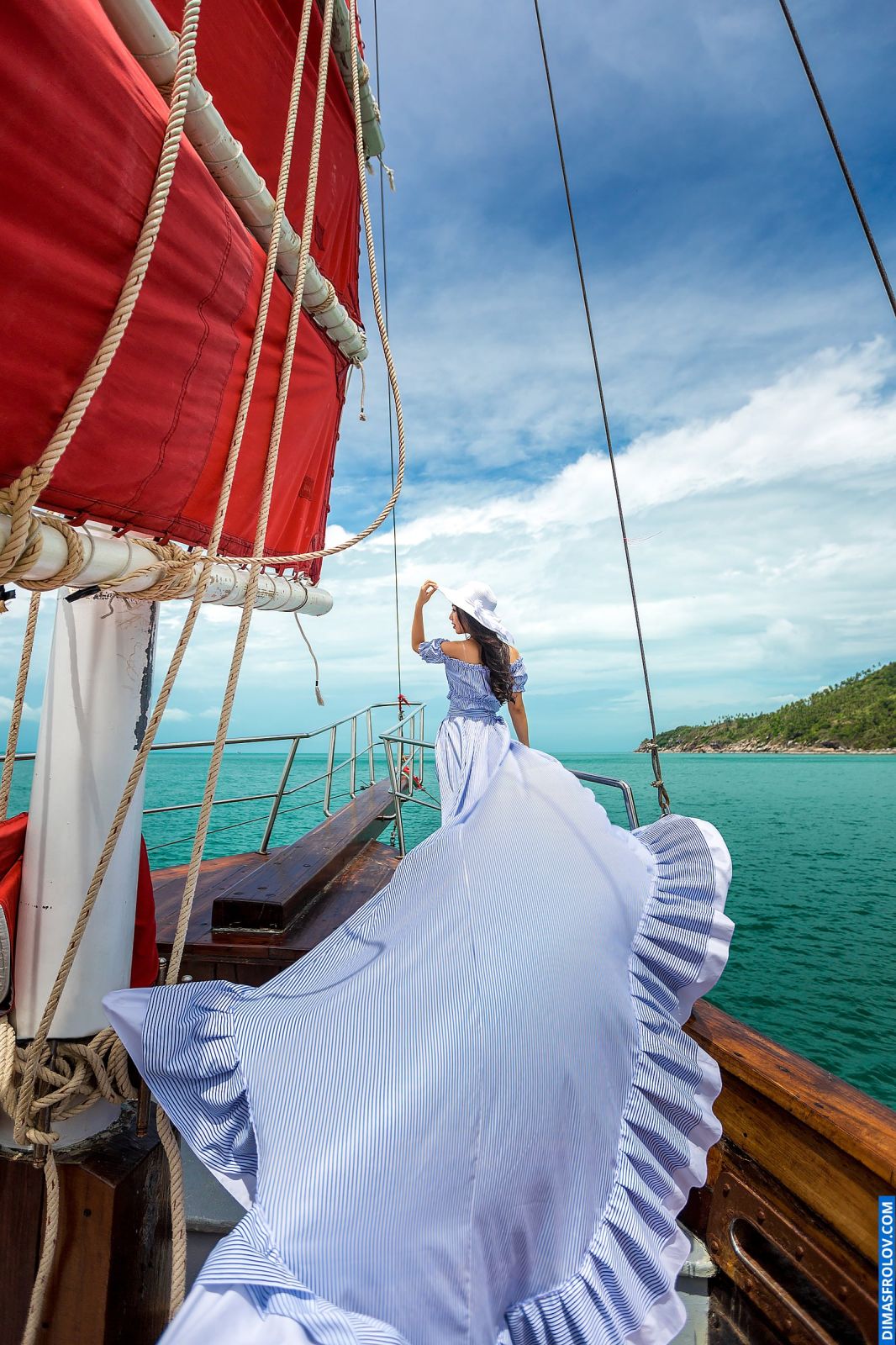
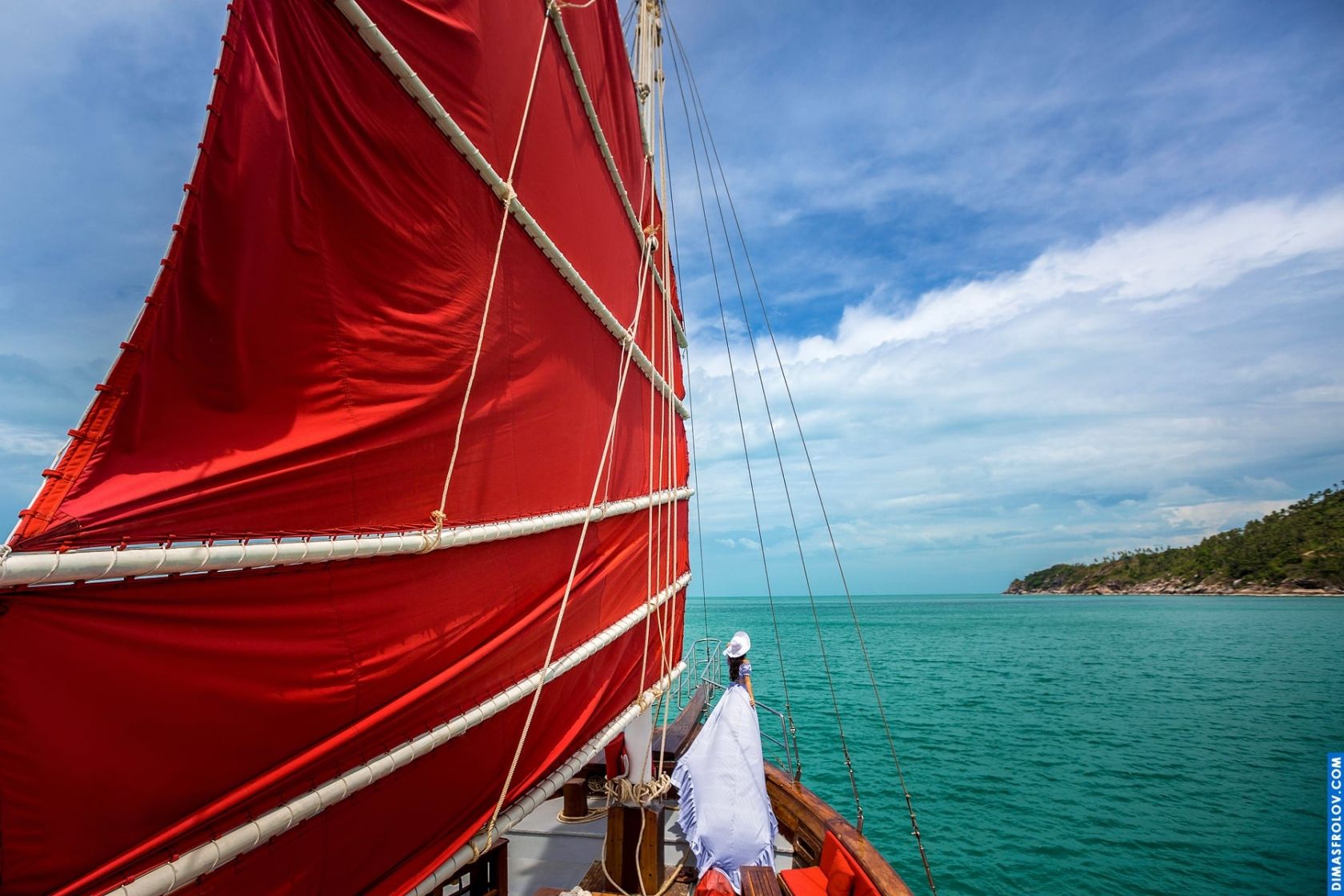
That gives a rule wider than one dress: a big frame needs more than the boat, it needs a clear deck. On a shared trip you will never have one. On a private charter you will have exactly as much as you arrange.
The frame with the whole yacht in it
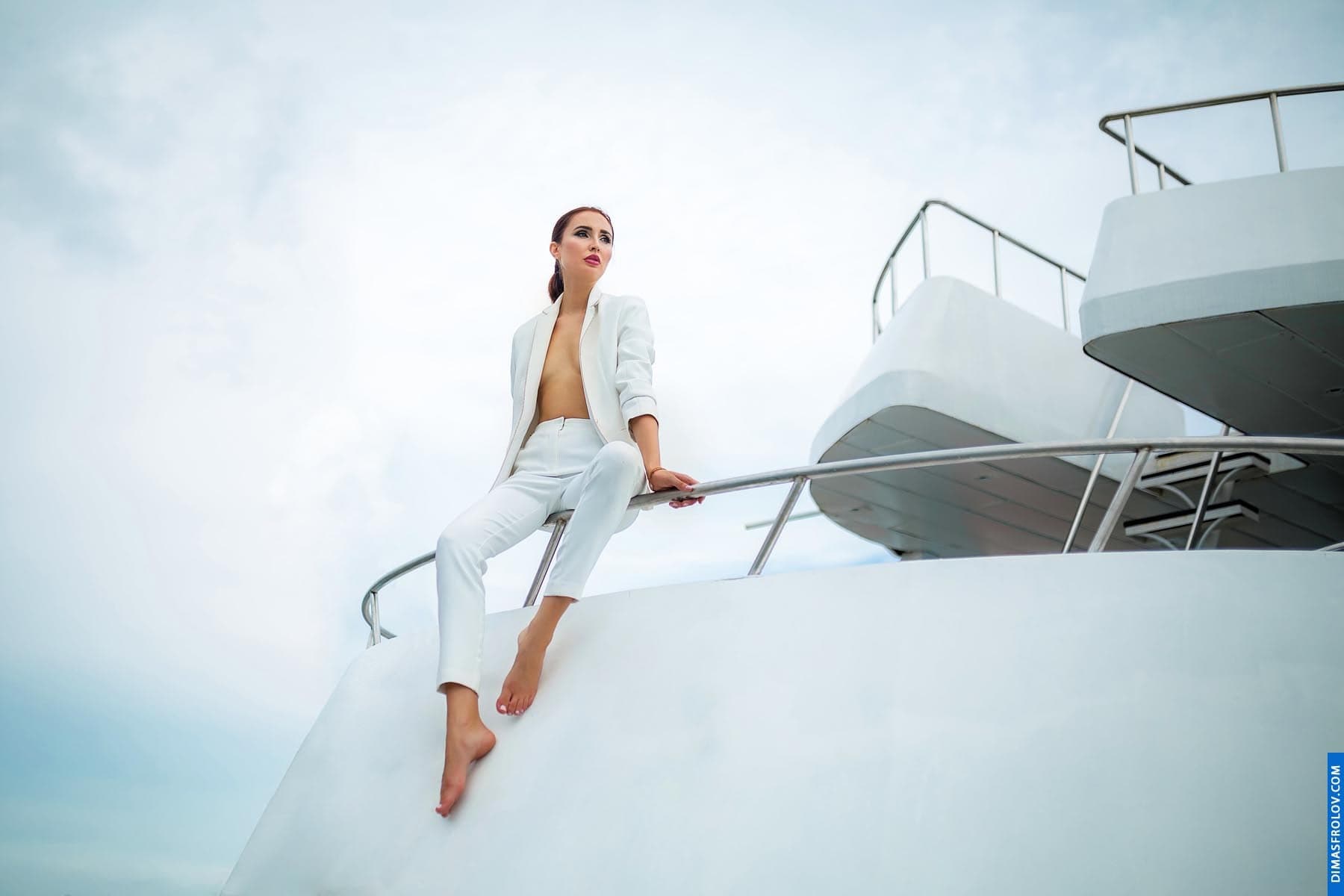
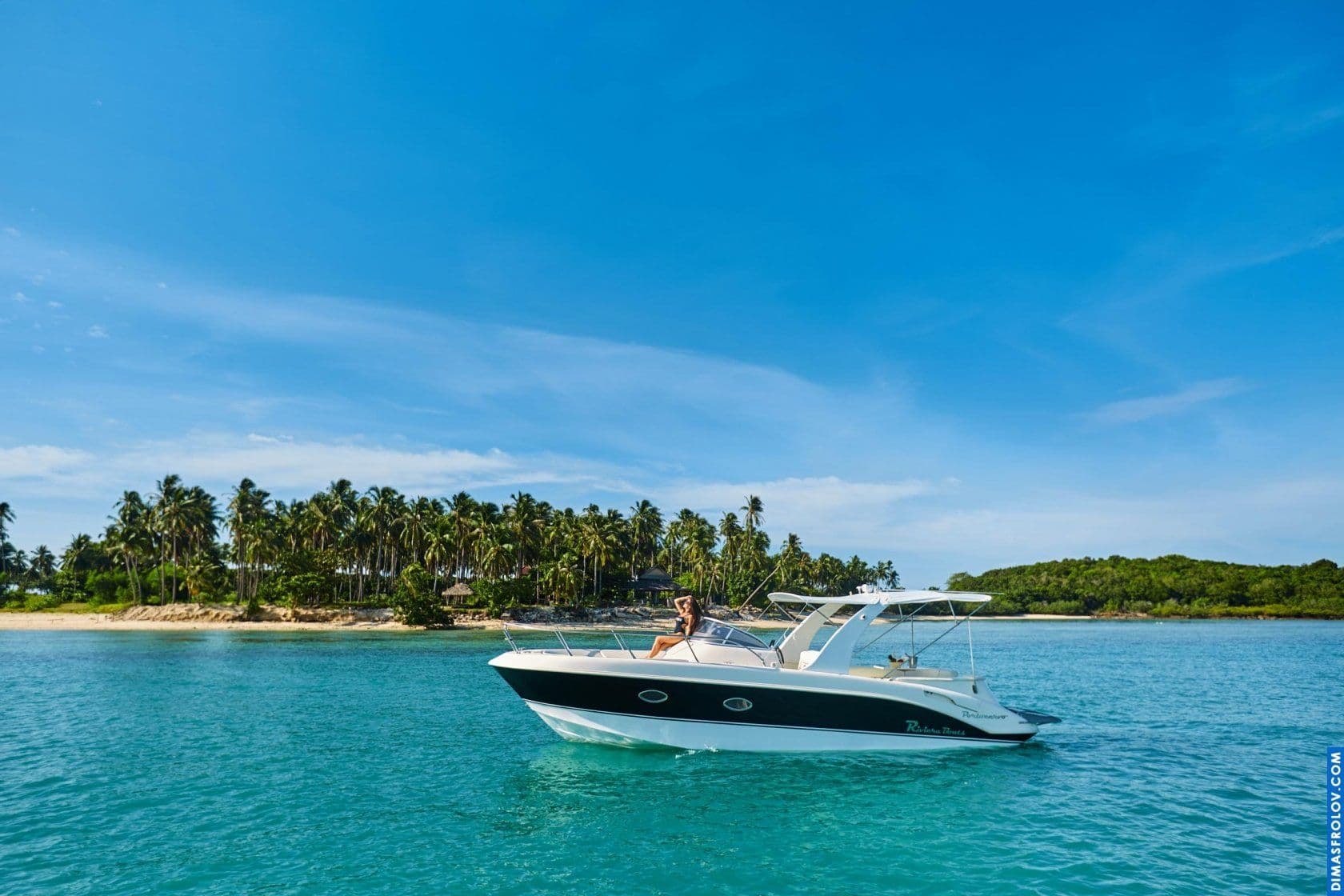
What people usually picture when they say "a yacht photo shoot" is the frame where you can see the yacht. And that's the one frame you can't take from on board: to photograph the boat you have to be off it.
So you need a second boat. I've done this 2 ways.
- From the tender, the inflatable that usually trails behind the yacht. Someone drives it, I circle the yacht and shoot. This is the most predictable way, but a tender doesn't go in the water in a minute, so it has to be in the plan for the trip.
- From a jet ski, which looks the most spectacular and only works in something close to flat calm. In any swell it's dangerous, and the frame doesn't come out anyway.
Both are arranged with the tour operator in advance. There isn't always a jet ski on board, and putting the tender in the water mid-route is a separate agreement rather than something the trip includes by default.
When it isn't just a boat ride
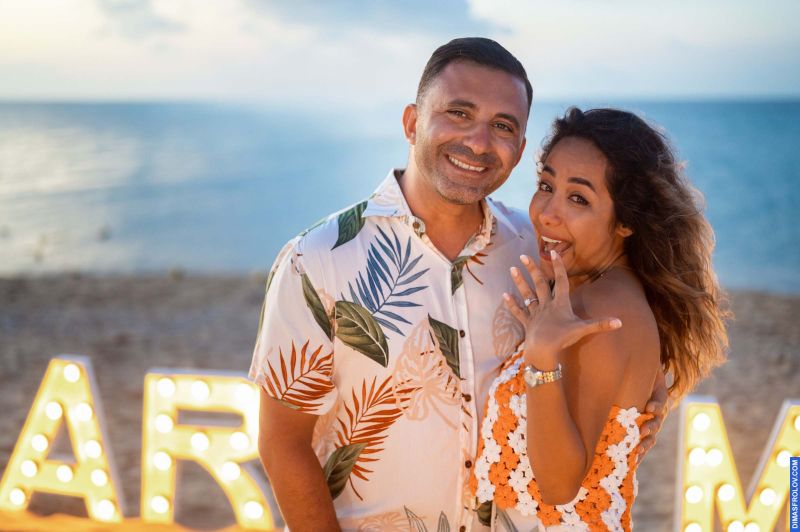
A yacht shoot is almost never for no reason. Most of the trips I've photographed had one: a proposal, an anniversary, a birthday, family visiting who won't all be in the same place again.
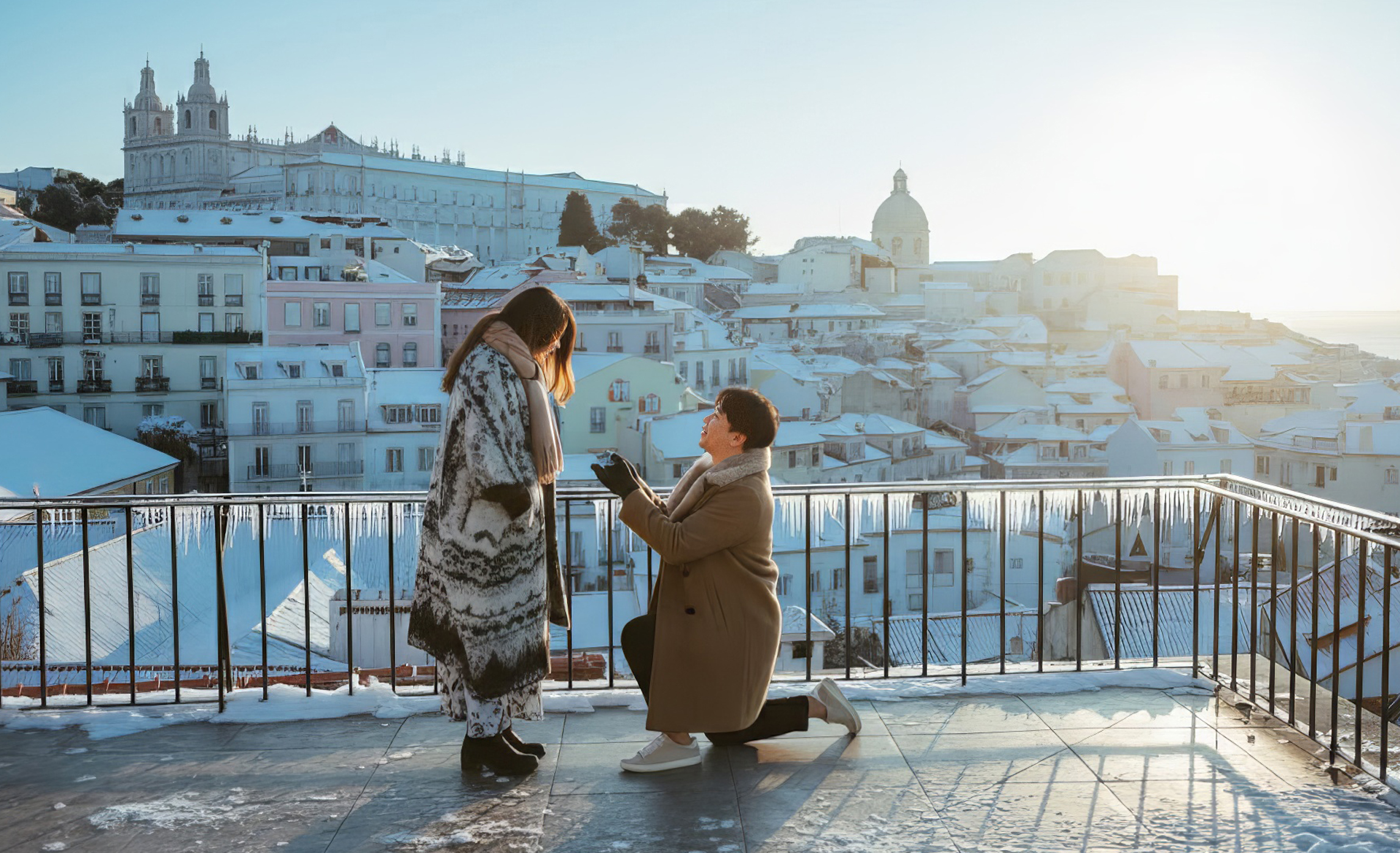
A proposal on the water has one advantage over the shore: no stranger walks into the frame. And one difficulty. On a small boat the photographer has nowhere to step back to, so it all gets settled with the skipper beforehand: where the couple will stand, where I shoot from, and at which moment the boat turns so that the city ends up behind them rather than the port.
A large yacht is a different story. People hold birthdays on them, small company events, parties on the water. The same line at 12 passengers applies here too: past that the requirements for the boat and the crew change, and the shoot changes with them. That's event coverage, not portraits of a couple on the bow.
What I can't know in advance
The weather on your date. Nobody knows it, and this article doesn't know it either. Everything above is about how the year works here, not about your Thursday.
One last thing, and it's the most useful. When you book the boat, ask the tour operator 3 questions in one go:
- how many people can come on board counting the photographer;
- where exactly we are going, along the river or into open water;
- what happens to the trip if the wind gets up that day.
3 answers, 1 message. After that you can settle the time and everything else without worrying.
I shoot in Lisbon and across Portugal. More about my work: photographer in Lisbon.