Engagement Photos in Lisbon: What Decides Where and When You Can Shoot
Date of publication: 28 Aug 2026 | Updated: 29 Aug 2026Three things will change your plan more than any list of pretty places, and none of them shows up in the usual guides. You can't legally have a professional session in the Sintra parks without written permission asked for 15 working days ahead. Monserrate Palace is under scaffolding until early 2027. And the beach everyone recommends, Praia da Ursa, doesn't need to be climbed down to at all.
I'm Dimas. I've photographed couples for 19 years and I work in Lisbon. This guide is the practical half of what I tell clients before a session, with the sources so you can check any of it yourself. If you want the service page instead, it's couples and engagement photography in Lisbon.
1. Sintra: permission, a fee, and scaffolding until 2027
Sintra is the location couples ask for most, and it's the one with the most rules. Parques de Sintra, which runs Monserrate, Pena, Queluz and the rest of the estate, treats professional photography for commercial or public use under a separate regime. You need written authorisation, and the request has to be filed 15 working days in advance. There's a published fee of 150€ per session, which covers park entry for up to 6 people including the photographer.
Tripods aren't allowed without a separate written exception. Neither are drones, external flash or reflectors. You can read the whole thing on the Parques de Sintra page for professionals.
Book Monserrate two days before you land and the answer is no. Not "it's difficult", just no. This is the single most common way a Sintra plan falls apart.
The rule about interiors is finer than it first looks, and worth getting right. Photographing inside the monuments isn't permitted with people in the frame. An empty interior is fine, and so is the entrance, and so is everything outside. That's exactly what I use.
The palace is being repaired, and you should know before you go
The operator's own notice: restoration work on the roofs runs until the first quarter of 2027, and it involves scaffolding and a temporary covering on the monument. Any article recommending Monserrate for its facade right now is describing a building you won't see.
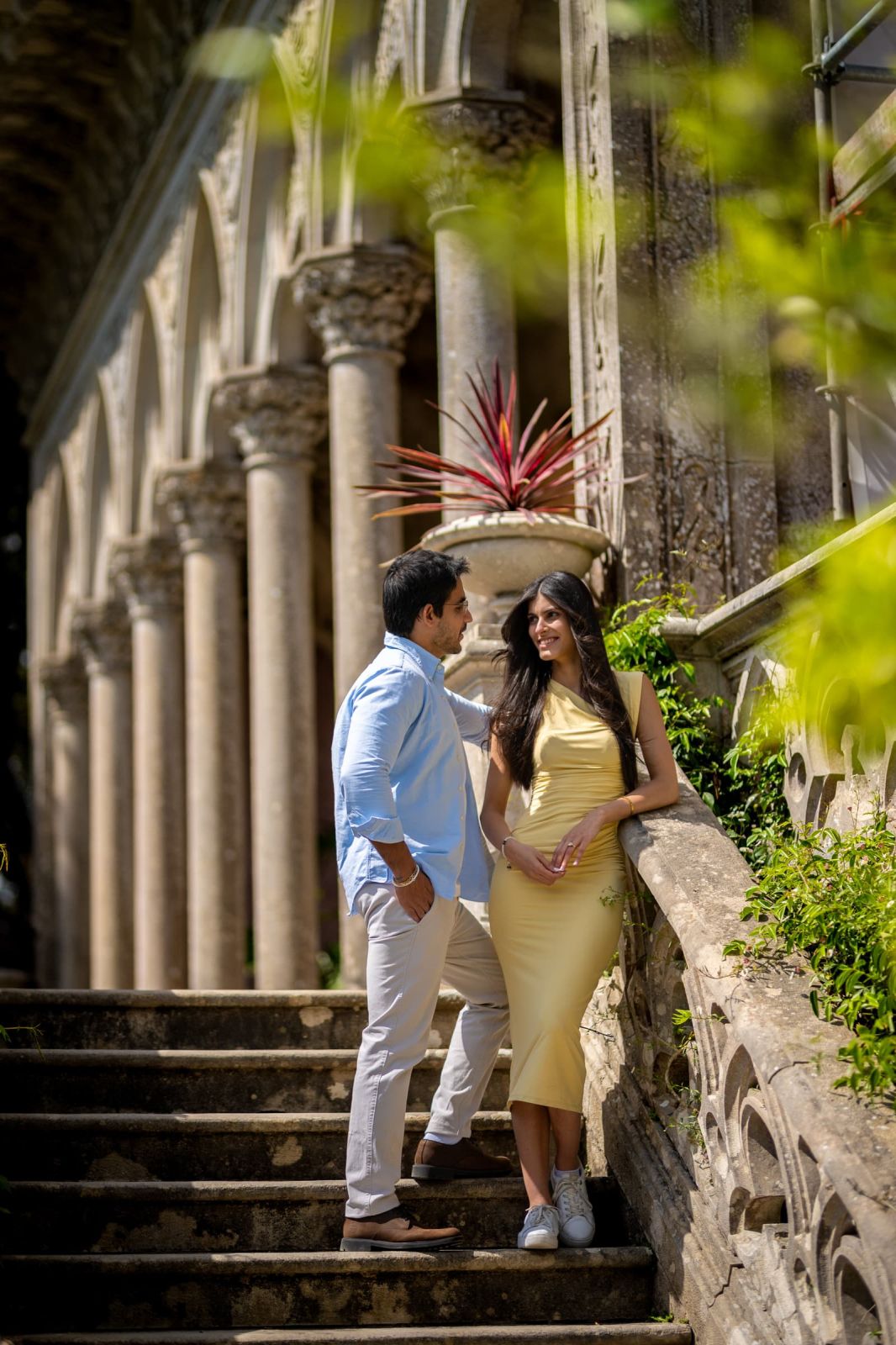
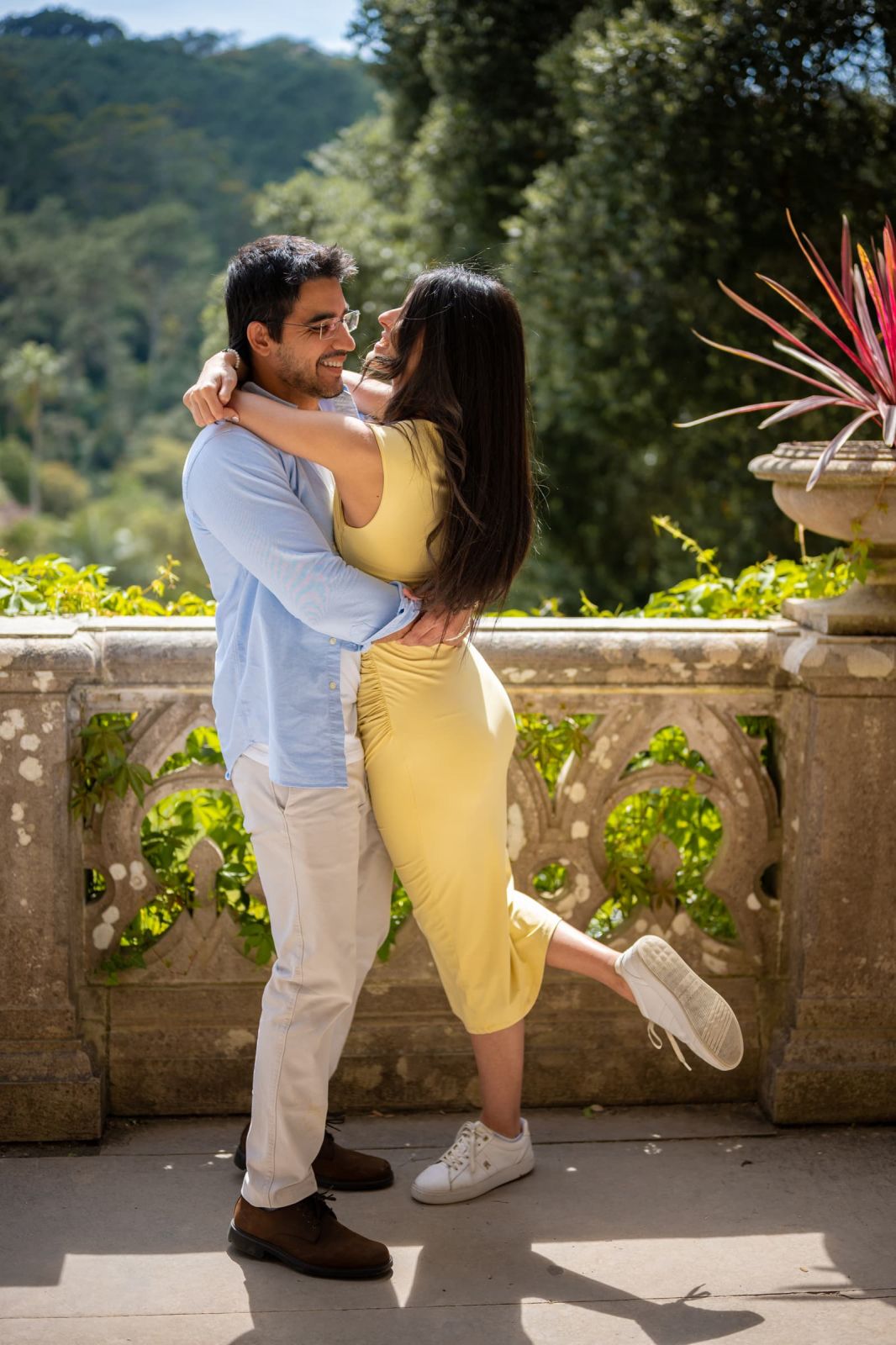
It doesn't make the place unusable. The scaffolding sits on the main entrance and the wide views of the palace, so those specific frames are gone for now, and the gardens, the arcade and the detail are not. The session in my Monserrate gallery was photographed while the works were already up. I just used the angles where they aren't.
The gate decides your light, not the sun
This is the part that quietly contradicts every guide that recommends Sintra and golden hour in the same breath. The park at Monserrate opens at 09:00 and closes at 19:00, last admission 18:00. The palace runs 09:30 to 18:00. So a sunrise session inside the estate is impossible, and from spring through autumn sunset happens after the gates have shut.
A Sintra session is a daytime session. That's not a compromise, it's the timetable, and it's better to plan for it than to be surprised by it. Times are on the Monserrate page, and they change with the season, so check yours.
2. The Atlantic coast: the descent you can skip, and the tide
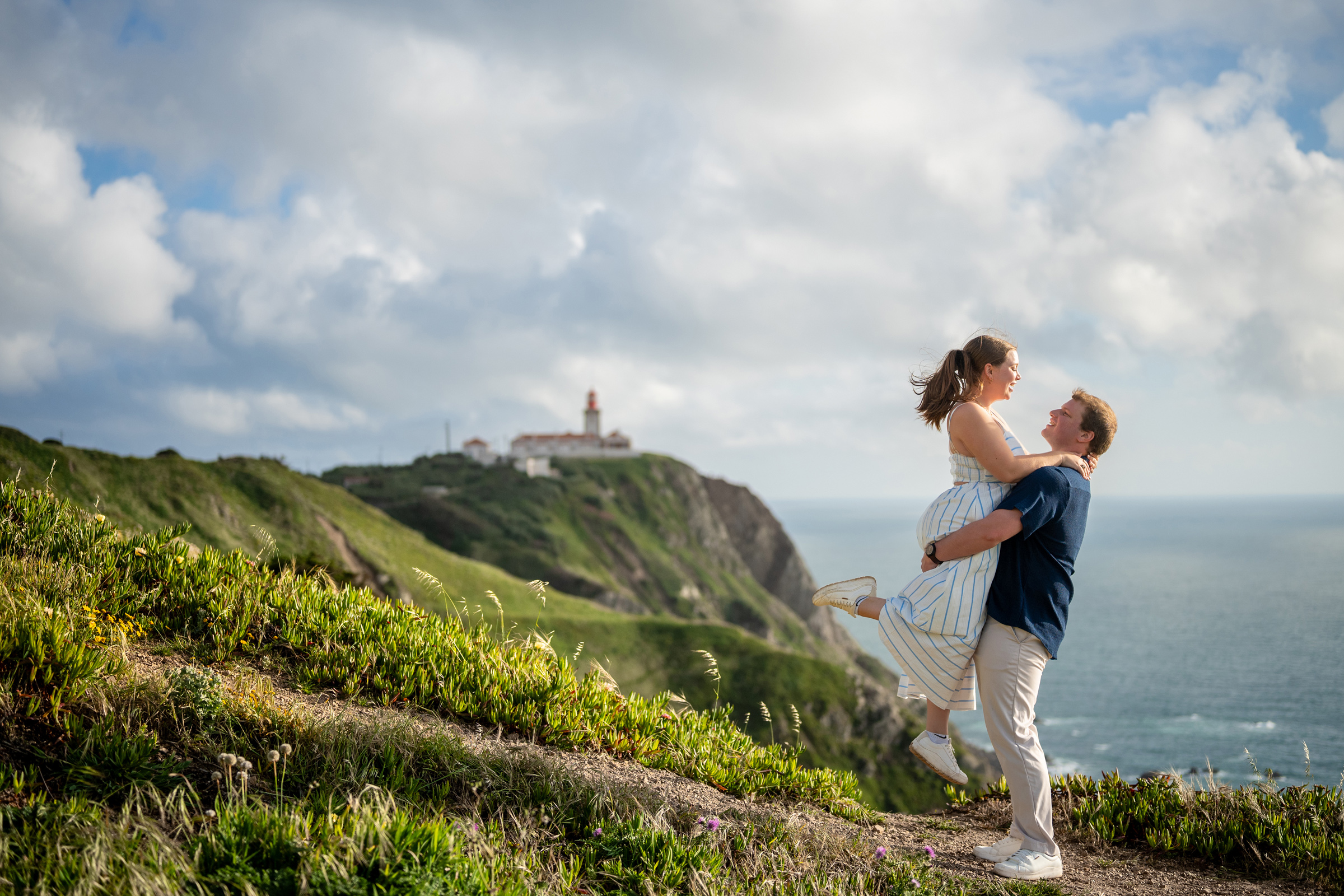
Forty minutes west of the city the land runs out. Cliffs, wind, and light with nothing in the way. It's where I'd go for the photographs you print large.
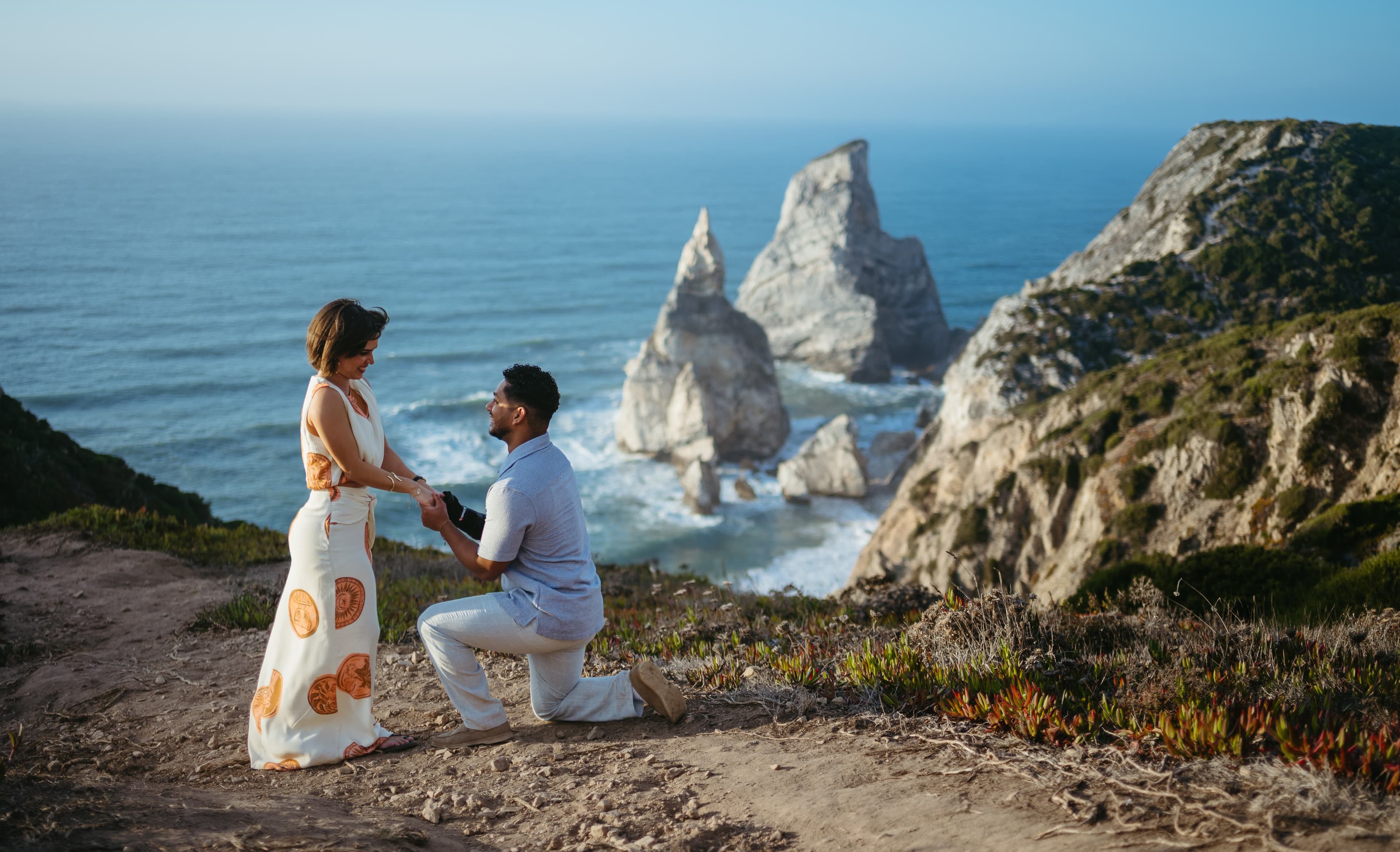
Praia da Ursa is the famous one, and the guides all describe the same thing: the last 400 metres are a descent down a cliff face, loose underfoot, hands needed in places, and not to be attempted in the rain. That's accurate. What none of them mention is that you don't have to go down at all.
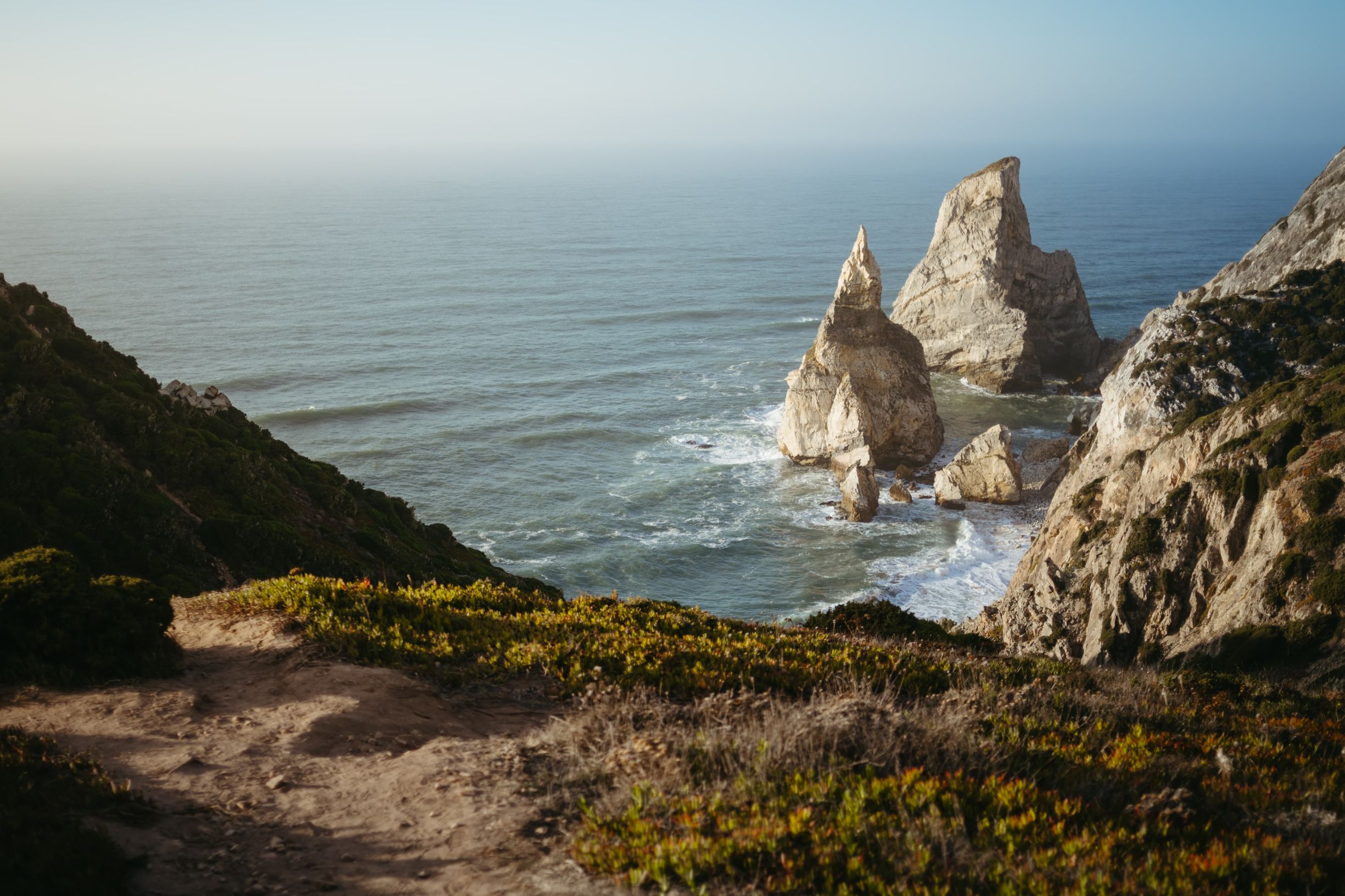
The view from the top has the whole beach in it. If you're in shoes you can't scramble in, and most people are, this is the answer.
If you do want to go down, know what you're going down to. At high water there's only 10 to 20 metres of beach left. You can still make photographs, there's nobody there, but you'll have spent a lot of time and effort to stand on a strip of sand. I don't usually recommend it.
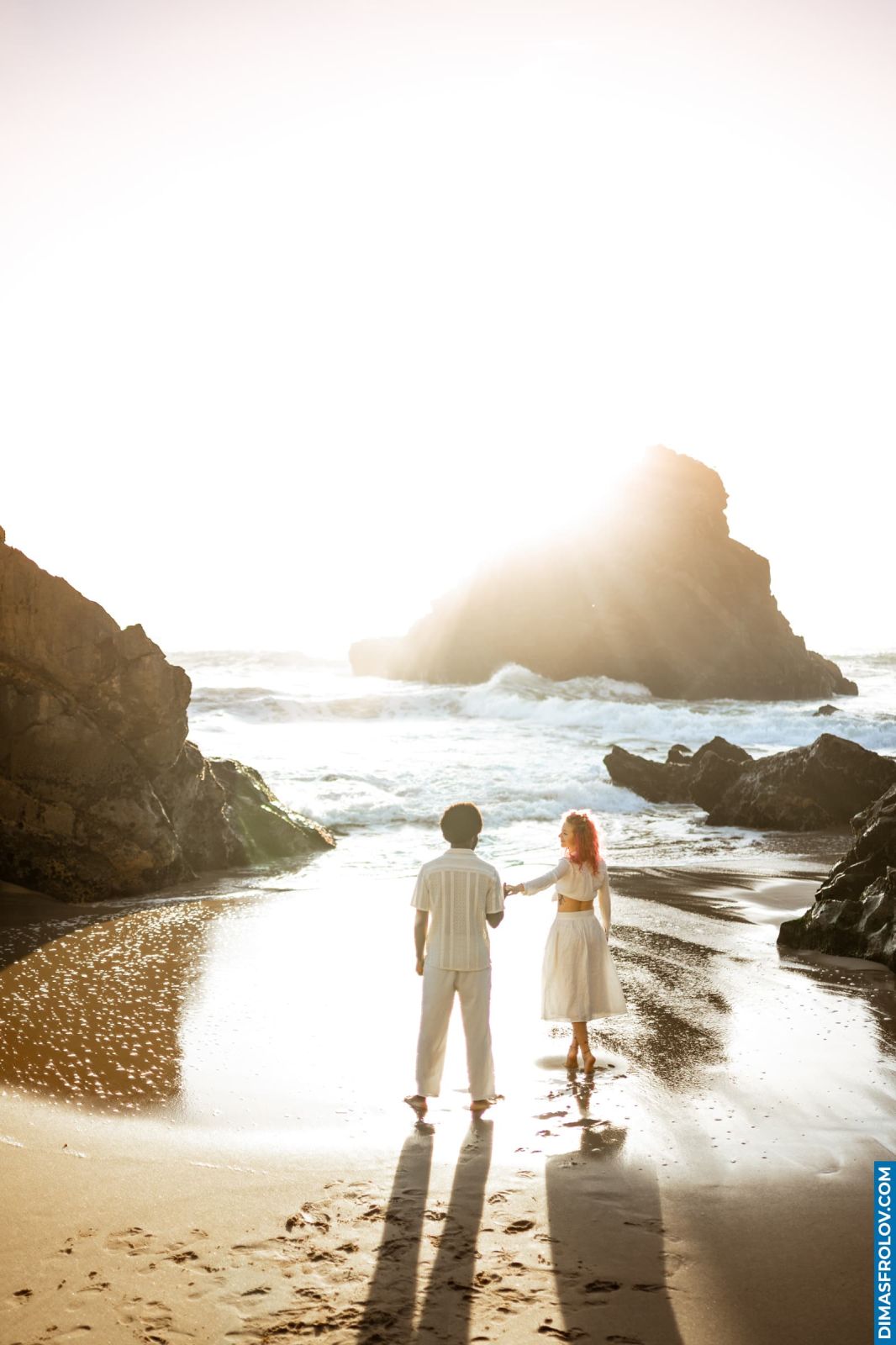
Praia da Adraga is the more workable beach, and the tide matters there in a different way. The far end, which is the part worth shooting because it's quieter and has rocks standing in the water, gets cut off at high tide. You simply can't reach it. The rest of the beach stays fully usable, and on the left there's a large rock arch that plenty of photographers use.
The tidal range on this coast is real: at Cascais, the reference port, published heights run from 0.2 to 4.0 metres. That's a 3.8 metre swing within a day. If a beach is the point of your session, check the Instituto Hidrográfico tide tables before you fix the hour.
3. Inside Lisbon: where sunrise actually works
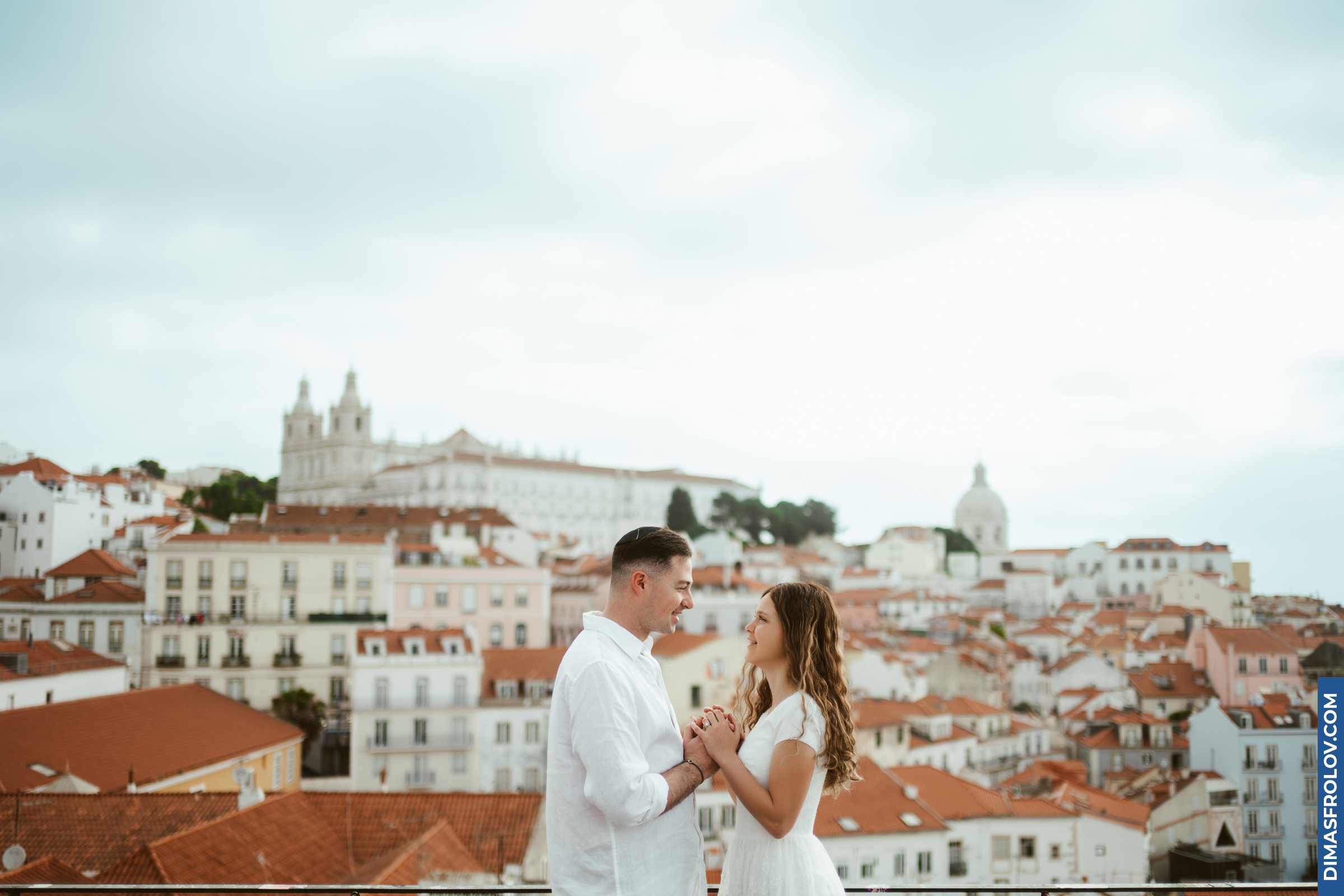
Everything above is about places with gates and tides. The city has neither, which is why the sunrise session that's impossible in Sintra is entirely possible in Alfama.
At 7 in the morning Alfama is empty. The light comes down the streets sideways, the trams run with nobody on them, and the "miradouros" (viewpoints) at Portas do Sol and Senhora do Monte belong to you. The same viewpoint at 11 has a queue on it. If you take one thing from this guide about the city, it's that the hour you choose changes the photographs more than the location does.
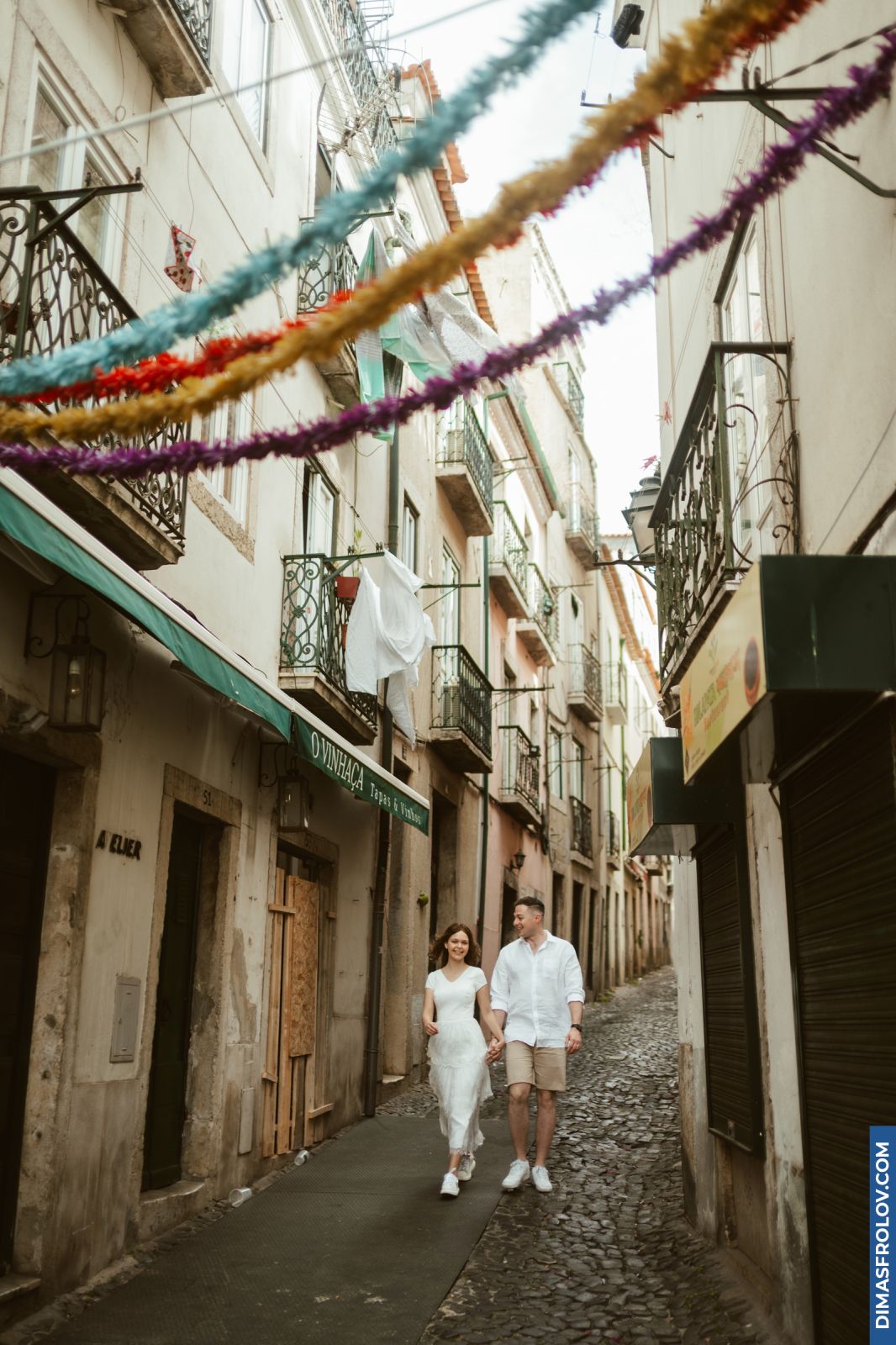
Bairro Alto and Príncipe Real are quieter in the morning than their nightlife reputation suggests, and they're the areas for a session that feels like a walk rather than a landmark tour. Painted doors, small squares, the fountain at Príncipe Real, jacarandas in late May and June.
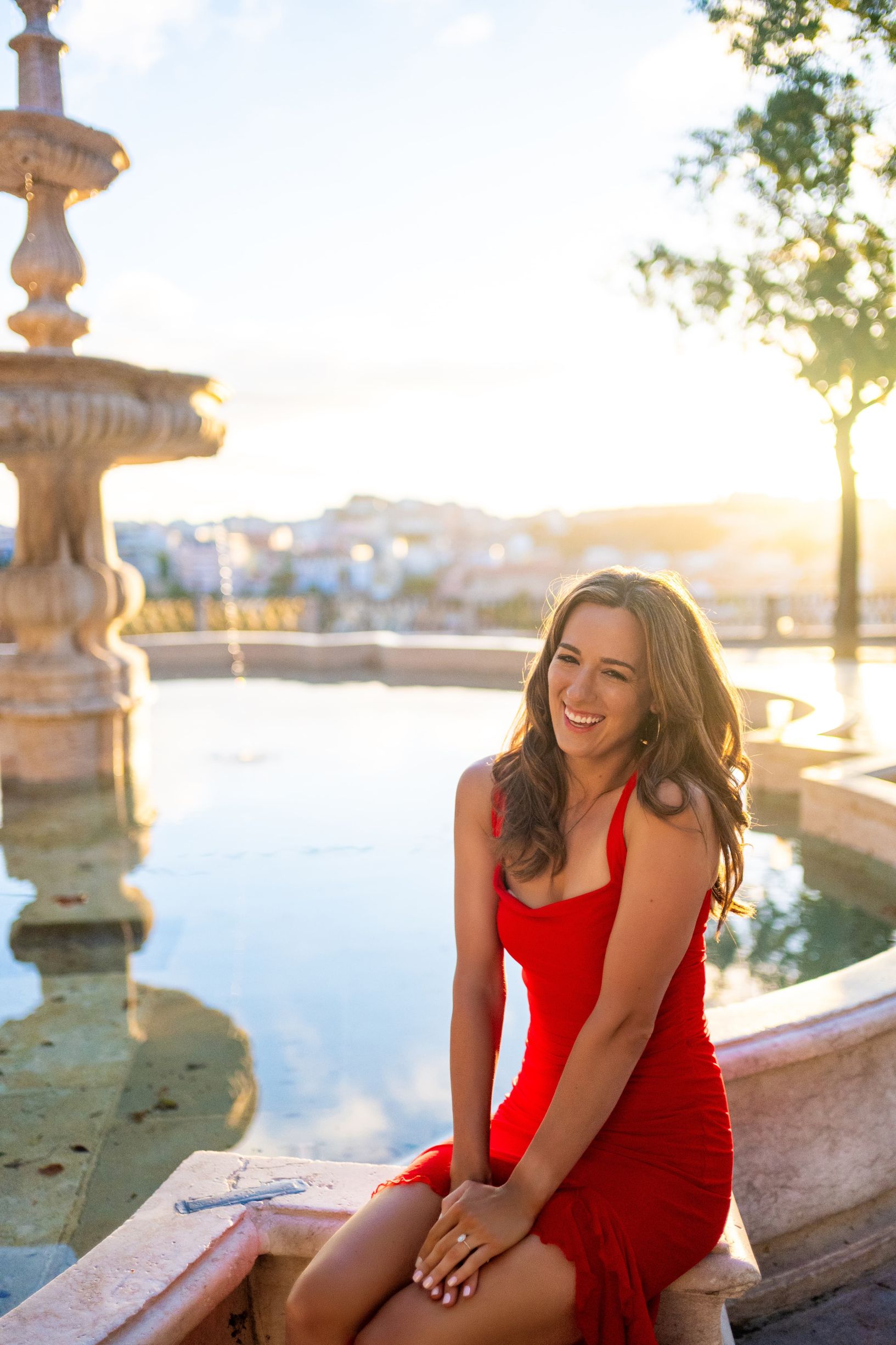
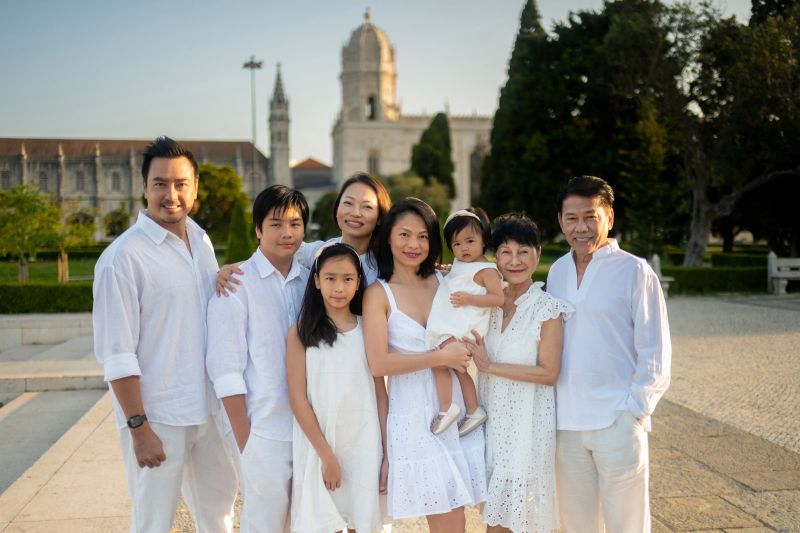
Belém gives you architecture that reads as Portugal instantly. It's also flat, open and busy, so it works better as a second stop than a whole session.
One legal note for the city
Photography for commercial purposes in Lisbon's public space needs a licence from the Câmara Municipal de Lisboa, requested through the Balcão Iniciativa Lisboa. Personal photos don't. The line between the two isn't only intent: using a tripod or a large lens can be enough for a session to be treated as commercial. The municipal page is here, and I've written the whole thing up separately in Lisbon photography permits: local rules and fees.
4. Light and season, honestly
The standard advice is sunrise or sunset, and it's good advice. It's also not a requirement, and I'd rather say so than pretend otherwise.
On 21 June the sun is up at 06:12 in Lisbon, so a June sunrise session means meeting before 6. In December the whole day is 9 hours and 30 minutes long and the sun never climbs high, which means the usable window is most of the working day instead of one hour at each end. Winter is the easier season to schedule, and the wetter one.
After 19 years I'll make midday work. The one thing I can't reproduce at midday is sunrise and sunset colour. That's the honest trade, and it's the only thing you actually lose.
So if your trip only allows the middle of the day, we go where midday is good rather than pretending the hour doesn't matter. And in Sintra, as above, midday is the only option anyway.
One more seasonal thing that belongs here because it's a legal restriction rather than weather. In summer the government can declare a "situação de alerta" (state of alert) for fire risk, and one of its measures is a ban on entering or remaining in forest areas, including the tracks that cross them. The most recent covered the whole mainland from 3 to 6 July 2026 and was announced on 2 July, one day ahead. It's the reason a July session on the Sintra coast needs an agreed fallback. The government communiqué lists what's prohibited.
5. What it costs, and the four questions to ask
Current rates are on the photo session prices page. I keep them there rather than in an article so they're never out of date by the time you read this. For scale, advertised entry points in Lisbon start around 200€ for an hour, and fuller engagement sessions are commonly quoted between 350€ and 650€.
Sessions here start at an hour, and there's a practical reason for that rather than a commercial one, which I've explained in why photographers require a 1 hour minimum.
The headline number isn't what separates one quote from another. These four answers are:
- How many edited photographs do you actually receive?
- Is there a charge per image after that?
- How long is delivery?
- Is travel outside the city included, or added later?
And if Sintra is on your list, ask a fifth: who pays the 150€ park fee, and has the authorisation been requested yet.
6. Planning a session around a short trip
Most couples I photograph are in Portugal for 4 to 7 days. The planning is simpler than it looks.
- Send dates before locations. Which mornings you're free decides more than anything else on the list, and for Sintra it decides whether authorisation is even possible.
- Pick one area. A session that walks one neighbourhood properly beats one that drives between five and rushes all of them.
- If it's Sintra, start 3 weeks out. 15 working days is 3 calendar weeks, and that's the minimum, not the comfortable margin.
- Check the tide if it's a beach. One link, two minutes, and it decides whether the good end of Adraga exists that afternoon.
- Keep the outfits simple. Colours that sit together, shoes you can walk hills in. There's a longer list in what to wear for a photoshoot in Lisbon.
- Agree a rain plan. It's almost always "move it a day", and in a week-long trip that costs nothing.
7. What you get, and when
An online gallery at full resolution, ready to download and share, no watermarks, no charge per photograph. The editing is quiet: colour and light corrected, skin left alone, the city looking like the city rather than like a filter.
Delivery takes up to 2 to 3 weeks. That's the market norm here rather than a slow number, and it's worth knowing, because a photographer promising you a full gallery in 3 days is telling you something about how the editing will be done. If you want the long answer, I've written it out in why photographers take so long to edit photos.
8. What I don't know
Two things I'd rather flag than guess at.
The 150€ Sintra fee is what's published now. I don't know whether it changes for 2027, and the restoration may affect access to parts of the gardens in ways the page doesn't spell out. Ask when you request authorisation.
I also don't have a monthly crowd figure for the viewpoints. What I can tell you is the scale: the Lisbon area recorded 21.3 million overnight stays in 2025 from 9.5 million guests, and August is the national peak. When I say a viewpoint is busy at 11 in the morning, that's a year of working these streets, not a statistic. I've photographed couples for 19 years, but only the last one of them here, and I'd rather say which is which.
Common questions
We've never been photographed together. Is that a problem? No, and it's the normal case. Most of my clients are regular people who have never done a professional shoot before. It's easier to photograph someone who is relaxed and enjoying the time than someone being told how to stand, so one of my skills is making people comfortable during the session. You don't need to be a model to look good in photos, and you won't be asked to pose or produce a smile on command.
Can we do the proposal and the engagement photos in one session? Yes, and it's common. The proposal happens in the first few minutes and the rest is the celebration. The planning for the secret part is different, and it's in the Lisbon proposal locations guide.
How far ahead should we book? A month is comfortable. For Sintra, 3 weeks is the floor because of the authorisation. But the real constraint is often my own calendar, so if you have one or two specific days in mind, book those first and we can settle the time and the place afterwards. That matters most for the people who can't move: a cruise stop with a single day ashore, or a proposal on a date that means something. Outside the busy months, a few days' notice is often enough.
Do you shoot outside Lisbon? Sintra and the Atlantic coast constantly, they're close enough to belong to a Lisbon session. Further south is a different kind of booking and rarely worth it for a session this length, so I'd rather say that plainly than take you to the Algarve for 2 hours.
Ready to plan yours?
Tell me the dates you're in Portugal and roughly what you have in mind. I'll come back with the mornings that are still free, what the light will be doing that week, and an honest opinion about where to go. If Sintra is on the list, I'll tell you straight away whether there's still time to get the authorisation.
I shoot in Lisbon and across Portugal. More about my work: photographer in Lisbon.